
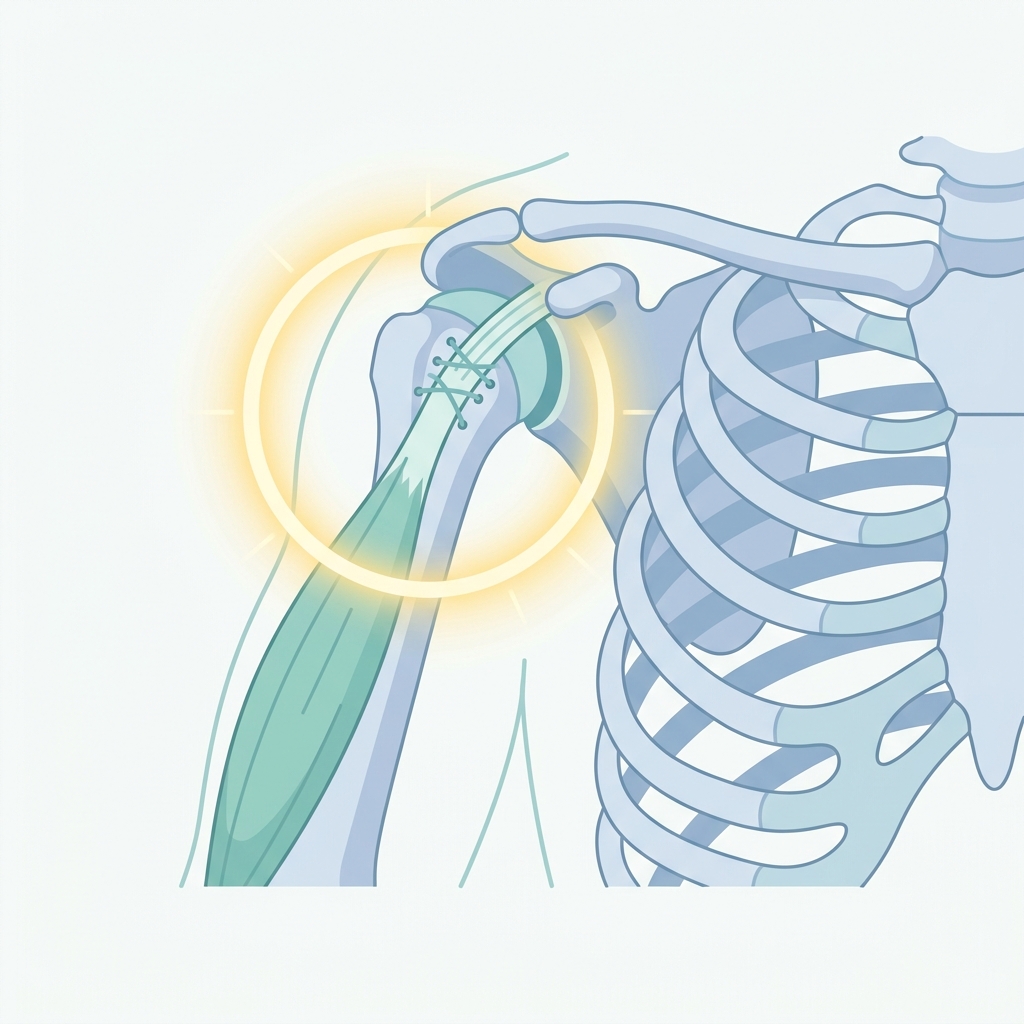
Tenodesis/Tenotomy of Biceps Tendon
Get Clear, Concise Answers to Your Top Questions About Tenodesis/Tenotomy of Biceps Tendon
Q1. What is the difference between biceps tenodesis and biceps tenotomy?
Both are surgical procedures used to treat biceps tendon issues, but they handle the tendon differently. In a biceps tenodesis, the surgeon cuts the long head of the biceps tendon from its attachment inside the shoulder joint and reattaches it to the upper arm bone (humerus) using a special screw or anchor. In a biceps tenotomy, the surgeon simply cuts the tendon and allows it to retract down into the arm, where it heals in a lower position without being surgically reattached.
Q2. Why are these procedures performed?
These procedures are recommended to relieve pain and restore function when a patient suffers from chronic inflammation, fraying, or a partial tear of the long head of the biceps tendon. They are typically considered after conservative treatments, such as physical therapy, activity modification, anti-inflammatory medications, or cortisone injections, have failed to provide relief.
Q3. How does the surgeon decide between tenodesis and tenotomy?
The decision depends on several patient-specific factors. The surgeon will evaluate:
- Your age and physical activity level
- Cosmetic concerns regarding the shape of your arm
- The presence of other shoulder injuries, such as rotator cuff tears
- Your overall health and ability to participate in post-operative rehabilitation
Q4. Will a biceps tenotomy cause my muscle to look different?
Yes, a biceps tenotomy can cause a cosmetic change commonly referred to as a \"Popeye muscle\" or \"Popeye deformity.\" Because the tendon is cut and not reattached, the muscle belly can slide further down the arm, creating a visible bulge. While this bulge is harmless and does not typically affect daily arm function, patients concerned about the cosmetic appearance of their arm usually opt for a biceps tenodesis instead.
Q5. Are these procedures performed arthroscopically?
Yes, both procedures are typically performed using arthroscopy. The surgeon inserts a tiny camera (arthroscope) and specialized instruments through small, keyhole incisions in the shoulder. This minimally invasive approach allows the surgeon to visualize the joint, perform the cut or repair, and address any other co-existing shoulder conditions with minimal damage to surrounding tissues.
Q6. Will I need anesthesia for this surgery?
Yes, the surgery is performed under general anesthesia, meaning you will be asleep during the procedure. Additionally, the anesthesiologist will often administer a regional nerve block, which numbs the nerves in your shoulder and arm. This nerve block provides excellent pain relief for the first 18 to 24 hours after surgery, making your initial recovery much more comfortable.
Q7. Is this an outpatient procedure?
Yes, both biceps tenodesis and biceps tenotomy are outpatient (same-day) procedures. Unless there are unusual medical complications or other extensive procedures performed at the same time, you will be able to go home a few hours after your surgery is completed once you are awake and comfortable.
Q8. Do I have to wear a sling after surgery, and for how long?
Yes, you will need to wear a sling to protect the healing tissues. The duration depends on the procedure:
- For a tenotomy: The sling is typically worn for comfort for only a few days to a week.
- For a tenodesis: The sling must be worn strictly for 3 to 4 weeks to protect the reattached tendon while it securely bonds to the arm bone.
Q9. How should I sleep after the procedure?
Sleeping can be challenging during the first few weeks. It is highly recommended to sleep in a semi-reclined position, such as in a recliner chair or propped up with several pillows in bed. Putting a small pillow behind your elbow can also support the arm and prevent it from falling backward, which can cause pain. Avoid sleeping flat on your back or on the surgical shoulder.
Q10. When can I start physical therapy?
For a tenotomy, gentle active movement can start almost immediately. For a tenodesis, physical therapy typically begins within 1 to 2 weeks. The initial phases focus on passive motion (where the therapist or your healthy arm moves the surgical arm) to prevent stiffness without putting stress on the newly reattached tendon.
Q11. When can I resume lifting and active use of my arm?
While you can use your hand and wrist for light activities (like typing or eating) immediately, active lifting or bending of the elbow against resistance is strictly restricted:
- For a tenodesis: Active use of the biceps muscle is restricted for at least 6 weeks to allow the tendon to heal to the bone.
- For a tenotomy: Progressive active use can start sooner, typically after 2 to 3 weeks, guided by your pain levels.
Q12. What are the main risks of these procedures?
While safe, all surgeries carry some risk. Risks include:
- Infection or bleeding at the incision sites
- Persistent shoulder pain or stiffness
- Nerve injury causing temporary or permanent weakness or numbness
- Failure of the tendon to heal to the bone (specific to tenodesis)
- Cosmetic deformity or mild muscle cramping (specific to tenotomy)
Q13. Will my arm strength be affected after surgery?
Most patients achieve excellent pain relief and return to normal daily activities. A biceps tenotomy may cause a very minor reduction in forearm rotation (supination) strength, which is rarely noticeable during everyday tasks. A biceps tenodesis secures the tendon, restoring full biceps strength and muscle contour.
Q14. How long does the entire recovery process take?
Most patients experience a significant reduction in pain within the first month. However, a complete recovery and return to heavy lifting, overhead sports, or strenuous manual labor usually takes between 3 to 6 months, depending on the specific procedure performed and your compliance with rehabilitation.
Q15. How should I prepare for my surgery day?
To prepare for your surgery day:
- Do not eat or drink anything after midnight the night before surgery.
- Arrange for a family member or friend to drive you home and assist you during the first 24 hours.
- Wear loose-fitting, comfortable clothing that buttons up the front, which is easier to put on over a bulky shoulder sling.
- Ensure you have your prescribed pain medications filled and ready at home.
We encourage you to write down any specific questions you have and discuss them thoroughly with your surgeon, doctor, or physical therapist. They are your best resource for personalized advice and care.
Disclaimer: This brochure provides general information and is not a substitute for professional medical advice. Always consult your doctor or qualified healthcare provider with any questions you may have regarding your specific medical condition and treatment plan.

Related articles
Browse all articlesTrusted External Resources
Curated educational materials to help you make informed decisions about your orthopaedic bone & joint conditions.

Orthopaedia

Orthogate Patient Education