
Total Shoulder Arthroplasty - Reverse
Get Clear, Concise Answers to Your Top Questions About Total Shoulder Arthroplasty - Reverse
Q1. What is a Reverse Total Shoulder Arthroplasty?
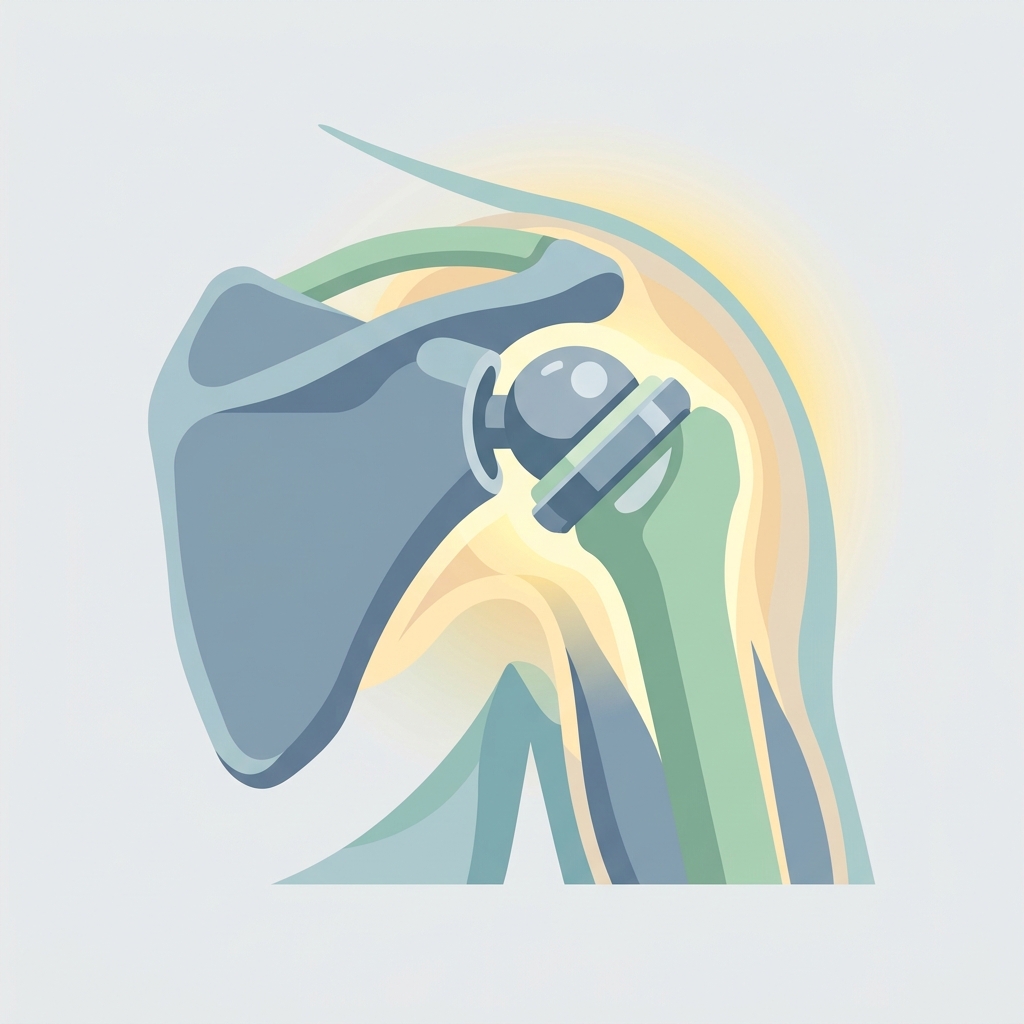
A reverse total shoulder arthroplasty (often called a reverse shoulder replacement) is a surgical procedure where the normal position of the ball and socket joint is switched or "reversed." In a healthy shoulder, the ball is on the top of the arm bone (humerus) and the socket is on the shoulder blade (scapula). In a reverse procedure, a metal ball is attached to the shoulder blade socket, and a plastic socket is placed on the top of the arm bone.
Q2. How does a reverse shoulder replacement differ from a standard (anatomic) shoulder replacement?
In a standard (anatomic) shoulder replacement, the surgeon replaces the damaged parts with implants that match your natural anatomy: a ball is placed on the arm bone and a socket is placed on the shoulder blade. This requires a functioning rotator cuff muscle group to power and move the arm. In a reverse shoulder replacement, the socket is placed on the arm bone and the ball is placed on the shoulder blade. This design bypasses a damaged rotator cuff, allowing the larger deltoid muscle on the outside of your shoulder to lift and move the arm instead.
Q3. Why is a reverse shoulder replacement performed instead of an anatomic one?
A reverse shoulder replacement is performed when a patient has significant shoulder damage combined with a rotator cuff that is torn, non-functional, or completely missing. In an anatomic replacement, the shoulder would not have the necessary stability or power to lift the arm without a working rotator cuff. By reversing the socket and ball, the joint becomes stable, and the deltoid muscle takes over the job of lifting the arm, restoring movement and relieving pain.
Q4. What conditions are most commonly treated with a reverse shoulder arthroplasty?
A reverse shoulder replacement is typically recommended for patients with:
- Rotator cuff tear arthropathy (severe shoulder arthritis combined with a massive, irreparable rotator cuff tear)
- Complex or severe shoulder fractures (particularly in older adults where repairing the bone is not feasible)
- Failed previous shoulder replacements that need to be revised
- Chronic shoulder dislocation or severe instability where the rotator cuff cannot support the joint
- Severe arthritis combined with significant bone loss in the natural shoulder socket
Q5. What are the key benefits of having a reverse total shoulder arthroplasty?
The primary goals of a reverse shoulder replacement are:
- Significant reduction or complete relief of chronic shoulder pain
- Improved ability to lift the arm forward and overhead, restoring daily functions like brushing hair or reaching shelves
- Restored joint stability, preventing the painful "shrugging" motion and dislocations
- Enhanced quality of life, allowing you to return to light recreational activities and sleep comfortably
Q6. How should I prepare for my reverse shoulder replacement surgery?
Preparing for surgery helps ensure a smooth recovery. Recommended preparation steps include:
- Attend pre-operative appointments and complete any required blood work, X-rays, or medical clearance checks.
- Arrange for a family member or friend to drive you home and stay with you for the first few days.
- Prepare your home by placing frequently used items within waist-level reach to avoid reaching or lifting.
- Set up a comfortable recovery space with a recliner chair, as sleeping in a semi-upright position is much easier post-surgery.
- Obtain assistive devices such as a button hook, long-handled shoehorn, and slip-on shoes.
Q7. What type of anesthesia is used during the procedure?
Most patients receive a combination of regional and general anesthesia:
- Interscalene Nerve Block: A regional block injected near the neck to numb the shoulder and arm. This provides excellent pain relief during and immediately after the surgery, lasting for 12 to 24 hours.
- General Anesthesia: You will be asleep during the entire procedure to ensure you are comfortable and unaware of the surgery.
Q8. What happens during the actual reverse total shoulder arthroplasty surgery?
During the procedure, which typically takes between 1.5 to 2.5 hours, the surgeon will:
- Make an incision along the front or top of the shoulder.
- Gently separate the muscles to expose the shoulder joint.
- Remove the damaged bone and cartilage from the humerus (arm bone) and the glenoid (shoulder socket).
- Attach the metal ball component (glenosphere) to the shoulder blade socket.
- Insert the metal stem and plastic socket component into the top of the arm bone.
- Test the joint's stability and range of motion before closing the incision with sutures or staples.
Q9. What should I expect immediately after surgery in the recovery room and hospital?
Immediately after surgery, you will be taken to the recovery room (PACU) where nurses will monitor your vital signs as you wake up. Your arm will be in a supportive sling, and you may feel numbness in your arm due to the nerve block. Most patients stay in the hospital for one night to manage pain, monitor recovery, and begin basic physical therapy before being discharged home the following day.
Q10. How long will I need to wear a sling, and how do I manage it?
You will need to wear a supportive shoulder sling with a small pillow (abduction pillow) for approximately 4 to 6 weeks. You should keep the sling on at all times, including while sleeping and walking. You may take the sling off only for showering and to perform gentle elbow, wrist, and hand exercises as directed by your surgical team.
Q11. What is the best way to sleep comfortably after a reverse shoulder replacement?
Sleeping can be challenging for the first few weeks after surgery. Tips for sleeping comfortably include:
- Sleep in a semi-reclined position, such as in a reclining chair or propped up with pillows in bed, for the first 4 to 6 weeks.
- Place a small pillow under your elbow or shoulder on the surgical side to prevent the arm from falling backward.
- Never sleep directly on the operated shoulder. Sleeping on your back or the opposite side is recommended.
Q12. What does the rehabilitation and physical therapy process look like?
Rehabilitation is essential for a successful outcome and is divided into phases:
- Phase 1 (Weeks 1-6): Focuses on protecting the joint, managing pain, and performing passive exercises where the therapist or your other arm moves the operated shoulder.
- Phase 2 (Weeks 6-12): Active-assisted and active exercises begin. You will start moving the arm on your own to rebuild basic mobility and strength.
- Phase 3 (Week 12+): Focuses on progressive strengthening, targeting the deltoid and shoulder blade muscles to maximize function.
Q13. What are the potential risks and complications associated with this surgery?
As with any major surgery, there are risks involved. While uncommon, potential complications include:
- Infection at the incision site or deep within the joint
- Dislocation, where the ball and socket components slip out of place
- Nerve damage, leading to temporary numbness or weakness in the arm
- Loosening or wear of the implants over time
- Fractures of the surrounding bone during or after implant placement
Q14. How long does the recovery process take, and when can I return to normal activities?
Most patients experience significant pain relief within the first 6 weeks, but full recovery takes about 6 to 12 months. Timeline guidelines include:
- Light activities: Writing, typing, and eating can be done within the first few weeks (keeping the elbow at your side).
- Driving: Usually permitted around 6 to 8 weeks, once you are out of the sling and have sufficient control of the arm.
- Light household work: Possible around 3 months.
- Recreational activities: Gentle swimming, golf, or gardening can typically be resumed between 4 to 6 months, after consulting your surgeon.
Q15. What is the long-term outlook and lifespan of a reverse shoulder replacement implant?
The long-term outlook is excellent, with over 85% to 90% of patients experiencing dramatic pain relief and improved function. Modern reverse shoulder implants are highly durable, with studies showing that approximately 90% of implants remain functional and intact for 10 years, and many last 15 years or longer. Avoiding heavy lifting and high-impact activities will help maximize the lifespan of your replacement.
We encourage you to write down any specific questions you have and discuss them thoroughly with your surgeon, doctor, or physical therapist. They are your best resource for personalized advice and care.
Disclaimer: This brochure provides general information and is not a substitute for professional medical advice. Always consult your doctor or qualified healthcare provider with any questions you may have regarding your specific medical condition and treatment plan.
Related articles
Browse all articlesTrusted External Resources
Curated educational materials to help you make informed decisions about your orthopaedic bone & joint conditions.

Orthopaedia

Orthogate Patient Education