
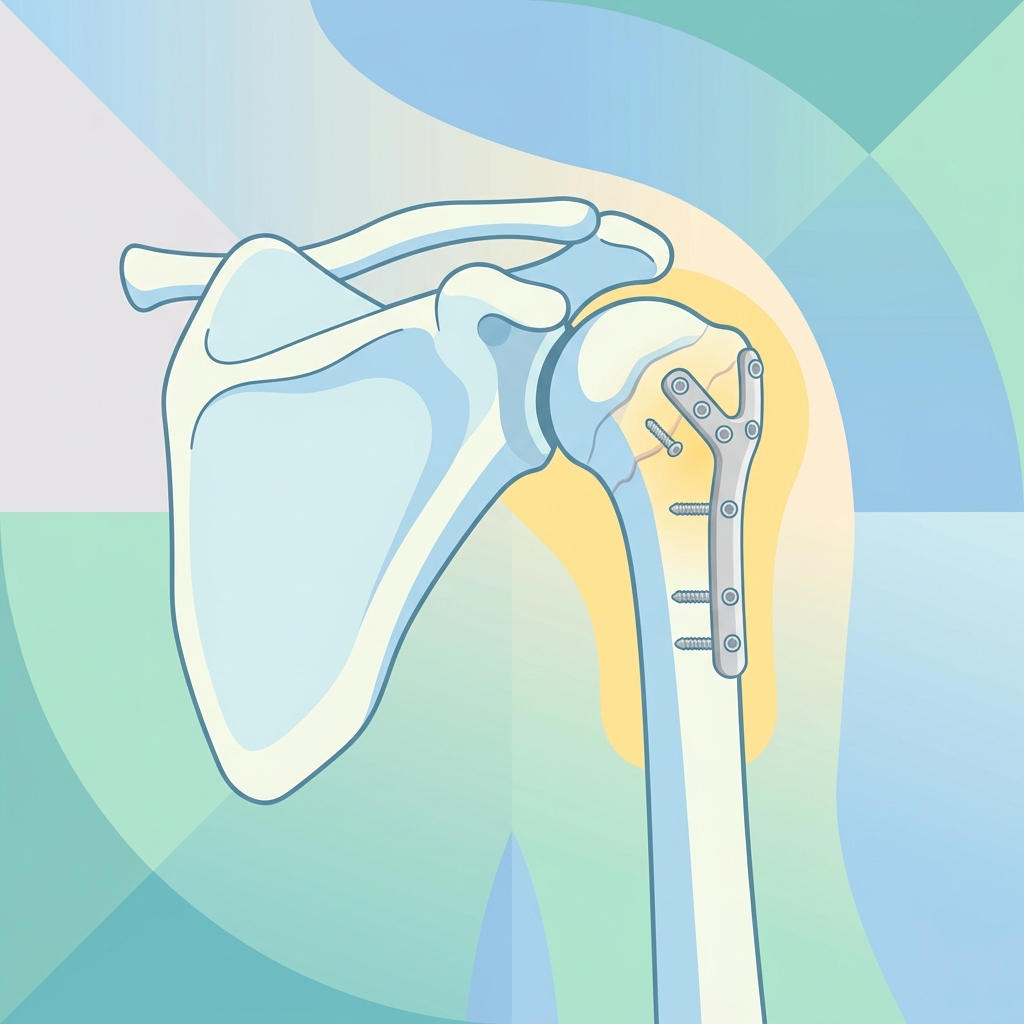
Proximal Humerus Open Reduction Internal Fixation (ORIF)
Get Clear, Concise Answers to Your Top Questions About Proximal Humerus Open Reduction Internal Fixation (ORIF)
Q1. What is a proximal humerus fracture?
A proximal humerus fracture is a break in the upper part of the arm bone (humerus) close to the shoulder joint. This type of fracture often occurs due to a fall onto an outstretched hand, a direct blow to the shoulder, or high-energy trauma such as a car accident. It is particularly common in older adults who may have weakened bones due to osteoporosis.
Q2. What does ORIF stand for, and what does the surgery involve?
ORIF stands for Open Reduction Internal Fixation. During this surgical procedure:
- Open Reduction: The surgeon makes an incision to access the shoulder and realign the fractured bone pieces back into their correct anatomical position.
- Internal Fixation: The surgeon uses specialized metal plates, screws, or heavy sutures to securely hold the bone fragments together while they heal.
Q3. How do I know if I need ORIF surgery for my shoulder fracture?
While many shoulder fractures can heal with conservative treatments like sling immobilization, surgery is typically recommended if:
- The bone fragments are significantly displaced or out of alignment.
- The fracture involves multiple broken pieces (partially or fully comminuted).
- The fracture involves the joint surface, which could lead to severe arthritis if left unaligned.
- There is a high risk that the bone will not heal correctly (nonunion) or will heal in a bad position (malunion).
Q4. What are the main benefits of having ORIF surgery?
The primary benefits of ORIF surgery include:
- Restored Alignment: Placing the bones back in their precise positions allows for optimal healing.
- Early Mobility: Secure fixation allows you to start gentle rehabilitation sooner, reducing shoulder stiffness.
- Pain Reduction: Stabilizing the broken bones helps alleviate severe pain during recovery.
- Improved Function: Rebuilding the shoulder anatomy maximizes long-term shoulder strength, motion, and function.
Q5. What are the risks and potential complications of this procedure?
As with any surgery, there are risks, which include:
- Infection or bleeding at the incision site.
- Nerve or blood vessel damage around the shoulder.
- Hardware irritation, where the plate or screws cause discomfort or limit movement.
- Nonunion (the bone fails to heal) or malunion (the bone heals in a poor position).
- Avascular necrosis, where the blood supply to the humeral head is disrupted, causing bone tissue damage.
- Shoulder stiffness and loss of range of motion.
Q6. How should I prepare for my upcoming shoulder ORIF surgery?
To prepare for your surgery, you should:
- Follow all pre-operative fasting (eating and drinking) instructions provided by your surgical team.
- Arrange for a responsible adult to drive you home and assist you for the first 24 to 48 hours.
- Set up your home environment beforehand, placing daily essentials within easy reach to avoid lifting.
- Wear loose, comfortable clothing, preferably a button-down shirt that can easily fit over a large shoulder dressing and sling.
Q7. What type of anesthesia is used during the surgery?
Typically, a combination of general anesthesia and a regional nerve block is used:
- General Anesthesia: This puts you to sleep for the duration of the procedure, ensuring you feel no pain.
- Regional Nerve Block (Interscalene Block): An injection near the neck numbs the nerves supplying the shoulder and arm. This provides excellent pain relief during the surgery and for up to 12 to 24 hours afterward.
Q8. How long does the ORIF procedure take?
The surgery generally takes between 1.5 to 3 hours to complete. This timeline depends on the complexity of the fracture, the number of bone fragments, and the specific fixation methods required. Additional time is also needed before the surgery for preparation and anesthesia, as well as afterward for monitoring in the recovery room.
Q9. What should I expect immediately after surgery in the recovery room?
When you wake up in the recovery room:
- Your arm will be placed in a protective sling or shoulder immobilizer.
- Your shoulder and upper arm will feel numb if you received a nerve block.
- Nurses will monitor your vital signs and administer pain medication if needed.
- You will have a dressing over your shoulder incision, which must be kept clean and dry.
Q10. Will I need to wear a sling, and if so, for how long?
Yes, wearing a protective sling is essential to protect the surgical repair. You will generally need to wear the sling for 4 to 6 weeks. It is typically worn at all times, including while sleeping and walking. Your surgeon will instruct you when it is safe to temporarily remove the sling for gentle exercises, showering, and dressing.
Q11. How can I manage my pain after the surgery?
Pain management involves a combination of strategies:
- Medications: Take prescribed pain relievers exactly as directed by your physician. You may transition to over-the-counter pain medications as discomfort decreases.
- Ice Therapy: Applying ice packs or using a cold therapy unit for 15 to 20 minutes at a time can help reduce swelling and pain.
- Elevation: Keeping your upper body slightly elevated helps prevent fluid buildup and swelling.
Q12. What is the safest way to sleep after a proximal humerus ORIF?
Sleeping can be challenging after shoulder surgery. The safest and most comfortable positions include:
- Semi-Reclined Position: Sleep in a recliner chair or prop yourself up in bed with several pillows at a 45-degree angle.
- Back Sleeping: If sleeping on your back, place a small pillow under your elbow and forearm on the surgical side to support the arm and prevent it from falling backward.
- Never sleep on your stomach or on your side where you would put pressure on the operated shoulder.
Q13. When can I start physical therapy, and what does the rehabilitation process look like?
Rehabilitation begins very early, often within the first week after surgery:
- Phase 1 (Weeks 1 to 6): Focuses on protecting the surgical site while performing passive range-of-motion exercises (where the therapist or your other arm moves your shoulder) and pendulum exercises.
- Phase 2 (Weeks 6 to 12): Progresses to active-assisted and active range-of-motion exercises as the bone continues to heal.
- Phase 3 (Month 3 and beyond): Introduces progressive strengthening exercises for the rotator cuff and surrounding shoulder muscles.
Q14. How long does it take for a proximal humerus fracture to heal completely?
The bone typically takes about 8 to 12 weeks to heal structurally. However, full recovery of shoulder strength, flexibility, and overall function can take anywhere from 6 to 12 months. Healing times can vary based on your age, overall health, bone quality, and adherence to your rehabilitation program.
Q15. When can I return to normal daily activities, driving, and work?
Your return to activities depends on your healing progress:
- Light daily activities: Using your hand for eating or writing can usually begin within a few weeks, keeping your elbow close to your side.
- Driving: You should not drive while wearing the sling or taking narcotic pain medications (typically 6 weeks or more).
- Work: Desk jobs can often be resumed within 2 to 3 weeks, while manual labor or heavy lifting jobs may require 4 to 6 months.
We encourage you to write down any specific questions you have and discuss them thoroughly with your surgeon, doctor, or physical therapist. They are your best resource for personalized advice and care.
Disclaimer: This brochure provides general information and is not a substitute for professional medical advice. Always consult your doctor or qualified healthcare provider with any questions you may have regarding your specific medical condition and treatment plan.

Related articles
Browse all articlesTrusted External Resources
Curated educational materials to help you make informed decisions about your orthopaedic bone & joint conditions.

Orthopaedia
Orthogate Patient Education