
Proximal Humerus Fracture
Get Clear, Concise Answers to Your Top Questions About Proximal Humerus Fracture
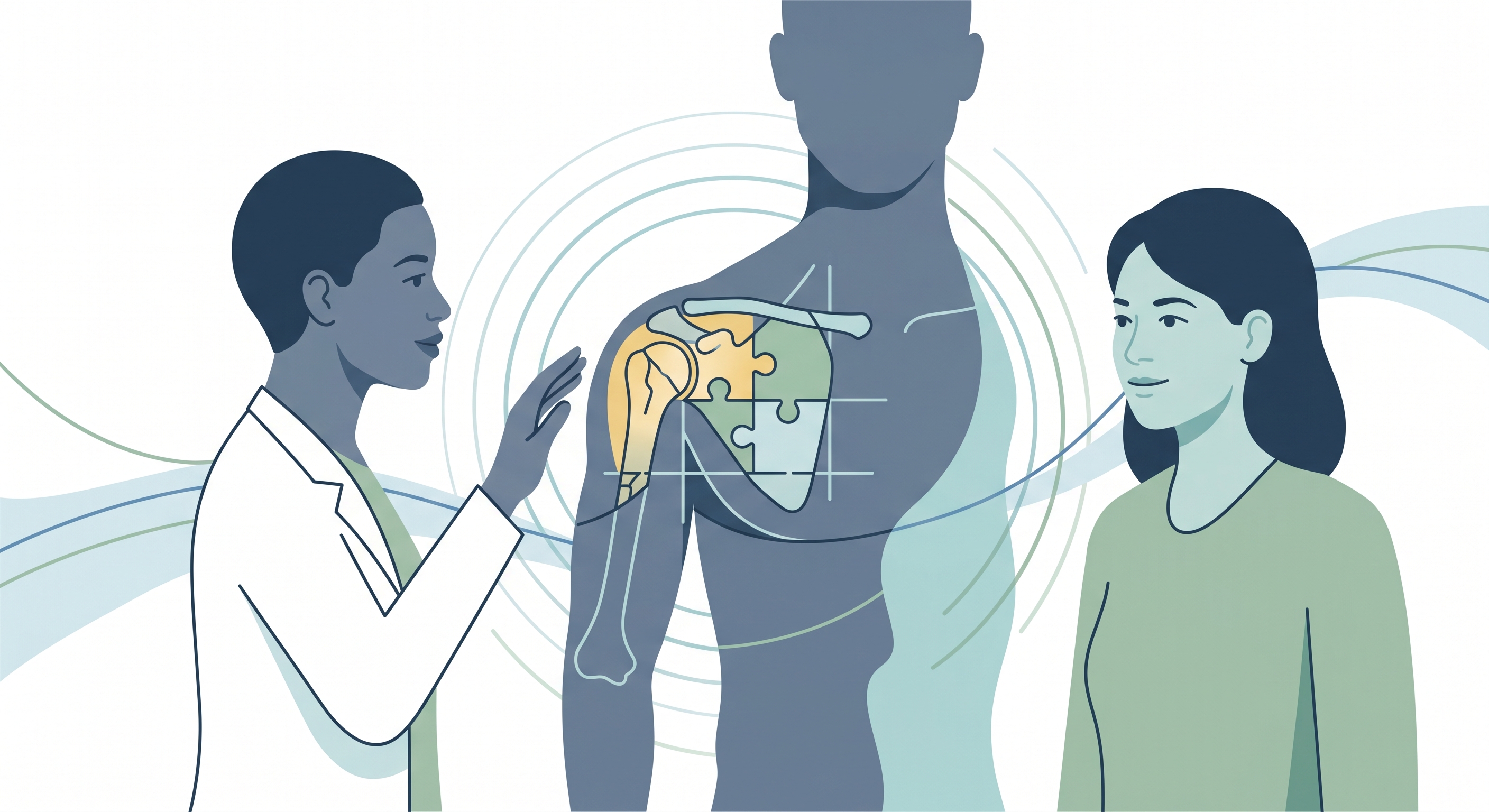
A proximal humerus fracture is a break in the upper part of your arm bone (humerus), near your shoulder joint. This area is like the "ball" of your shoulder's ball-and-socket joint. These fractures are common, especially in older adults, often resulting from a fall onto an outstretched arm. This brochure will help you understand your condition, treatment options, and what to expect during your recovery.
Q1: What is a proximal humerus fracture?
A proximal humerus fracture is a break in the top part of your upper arm bone (humerus), right below your shoulder. This bone forms the "ball" of your shoulder joint.
Q2: What causes a proximal humerus fracture?
These fractures most often occur from a fall directly onto the shoulder or onto an outstretched arm. They can also result from high-energy injuries like car accidents, especially in younger individuals.
Q3: What are the common symptoms of a proximal humerus fracture?
Common symptoms include:
- Severe pain in the shoulder and upper arm
- Swelling and bruising around the shoulder and down the arm
- Difficulty moving your arm
- A "pop" or grinding sensation at the time of injury
- A noticeable deformity or bump in the shoulder area
Q4: How is a proximal humerus fracture diagnosed?
Your doctor will perform a physical exam and ask about your injury. X-rays are typically used to confirm the diagnosis and determine the type and severity of the fracture. Sometimes, a CT scan may be needed for more detailed imaging.
Q5: What are the non-surgical treatment options?
Most proximal humerus fractures can be treated without surgery, especially if the bone pieces are not significantly out of place. Non-surgical treatment usually involves:
- Immobilization: Wearing a sling to support and protect your arm, typically for 2-6 weeks.
- Pain Management: Medications and ice to control pain and swelling.
- Early Motion: Gentle exercises for your hand, wrist, and elbow to prevent stiffness, often starting soon after the injury.
- Pros: Avoids surgical risks, often successful for less severe fractures.
- Cons: Can lead to stiffness, slower return to full strength, potential for bone to heal in a less-than-perfect position (malunion) or not heal at all (nonunion).
Q6: What are the surgical treatment options?
Surgery may be recommended for more severe fractures where the bone pieces are significantly displaced, fragmented, or involve the joint surface. Common surgical options include:
- Open Reduction and Internal Fixation (ORIF): The surgeon realigns the bone pieces and holds them in place with plates, screws, or pins.
- Hemiarthroplasty: Replacing only the "ball" portion of the shoulder joint with an artificial implant.
- Reverse Total Shoulder Arthroplasty: Replacing both the "ball" and "socket" with an artificial implant, but in a "reversed" position. This is often chosen for older patients with complex fractures or poor bone quality.
- Goals: To restore proper alignment of the bone, improve shoulder function, and reduce pain.
Q7: What does the surgical procedure involve (briefly)?
The specific procedure depends on the type of fracture. Generally, you will receive anesthesia. The surgeon will make an incision to access the fractured bone, realign the pieces, and secure them with implants. In joint replacement, the damaged bone is removed and replaced with artificial components.
Q8: What are the potential risks of surgery?
As with any surgery, risks include:
- Infection
- Bleeding
- Nerve or blood vessel damage
- Anesthesia complications
- Stiffness or limited motion
- Failure of the implants
- Nonunion (bone not healing) or malunion (bone healing in a poor position)
Q9: What do I need to do before treatment/surgery?
- Discuss all your medications with your doctor, including over-the-counter drugs and supplements.
- Follow any instructions regarding fasting before surgery.
- Arrange for someone to drive you home after surgery and help you with daily activities.
- Modify your home environment to be safe and accessible (e.g., remove tripping hazards).
Q10: What can I expect immediately after treatment/surgery?
You will likely experience pain, which will be managed with medication. Your arm will be immobilized in a sling. You will receive instructions on how to care for your incision (if applicable) and basic exercises for your hand, wrist, and elbow.
Q11: How long is the typical recovery period?
Recovery varies widely depending on the fracture severity and treatment.
- Initial healing (when the bone starts to become stable) typically takes 6-12 weeks.
- Full recovery of strength and motion can take 3 months to a year, or even longer for complex cases. Some stiffness may be permanent.
Q12: What does rehabilitation/physical therapy involve?
Physical therapy is crucial for regaining strength and movement. It usually progresses in phases:
- Phase 1 (Early): Gentle, passive range of motion exercises (your therapist moves your arm for you) and active exercises for your hand, wrist, and elbow.
- Phase 2 (Intermediate): Active-assisted exercises (you help move your arm) and light active exercises for your shoulder.
- Phase 3 (Advanced): Strengthening exercises and more aggressive stretching to regain full range of motion. Your therapist will guide you.
Q13: How will pain be managed?
Your doctor will prescribe pain medication, which may include opioids for severe pain, and over-the-counter options like acetaminophen or NSAIDs (non-steroidal anti-inflammatory drugs). Applying ice packs to the injured area can also significantly help reduce pain and swelling.
Q14: What can I do at home to help my recovery?
- Follow instructions: Adhere strictly to your doctor's and physical therapist's guidelines.
- Pain management: Take medications as prescribed and use ice packs regularly (15-20 minutes every 2-3 hours, wrapped in a towel).
- Sling care: Wear your sling as instructed, only removing it for hygiene and prescribed exercises.
- Hygiene: Learn how to wash and dress with your sling on (e.g., lean forward to wash under your armpit).
- Sleeping: You may find it more comfortable to sleep propped up with pillows or in a recliner.
- Avoid smoking: Smoking significantly slows bone healing and should be avoided.
- Nutrition: Eat a healthy diet to support healing.
Q15: When can I expect to return to daily activities, work, driving, sports, etc.?
- Daily Activities: Light daily tasks may be possible within a few weeks, but activities requiring lifting or overhead motion will take longer.
- Driving: Generally, you should not drive while wearing a sling or taking narcotic pain medication. You'll need to be able to comfortably grip the steering wheel and perform an emergency stop. This often takes 4-8 weeks or more. Check with your insurance company.
- Work: Desk jobs or light duties may be possible within a week or two. Jobs requiring heavy lifting or manual labor can take 6-12 weeks or longer.
- Sports/Strenuous Activities: Return to sports or heavy activities typically takes 3-6 months or more, and only after your doctor and physical therapist clear you, and you have regained significant strength and motion.
We encourage you to write down any specific questions you have and discuss them thoroughly with your surgeon, doctor, or physical therapist. They are your best resource for personalized advice and care.
Disclaimer: This brochure provides general information and is not a substitute for professional medical advice. Always consult your doctor or qualified healthcare provider with any questions you may have regarding your specific medical condition and treatment plan.

Related articles
Browse all articlesTrusted External Resources
Curated educational materials to help you make informed decisions about your orthopaedic bone & joint conditions.

Orthopaedia
Orthogate Patient Education