
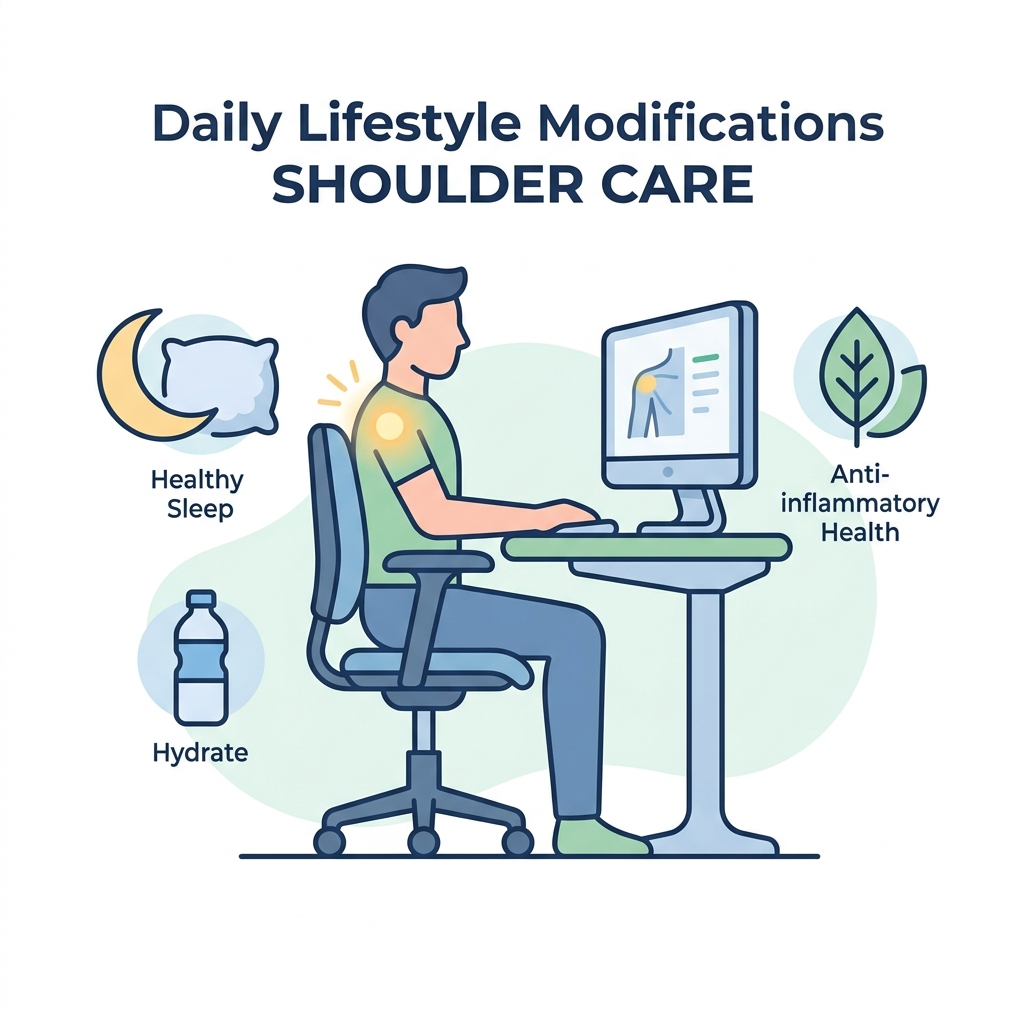
Lifestyle Modifications for Shoulder Pain
Get Clear, Concise Answers to Your Top Questions About Lifestyle Modifications for Shoulder Pain
Q1. What are lifestyle modifications for shoulder pain, and how do they help?
Lifestyle modifications are simple, everyday changes you make to how you move, rest, eat, and manage stress to reduce the strain on your shoulder joint. By adjusting these factors, you can:
- Reduce inflammation and pain naturally
- Prevent further wear and tear on the joint and tendons
- Improve the effectiveness of other treatments like physical therapy
- Enhance your overall quality of life and mobility
Q2. How does my sleeping position affect my shoulder pain, and how can I improve it?
Sleeping on an injured or inflamed shoulder can compress the joint and reduce blood flow, worsening pain and stiffness. To improve your sleep quality and protect your shoulder:
- Avoid sleeping directly on the painful side.
- Sleep on your back or on the opposite side with a pillow supporting your painful arm.
- Use a small pillow under your elbow to keep your shoulder in a neutral position if you sleep on your back.
- Avoid sleeping with your arm tucked under your head or pillow, as this pinches the tendons.
Q3. What is the role of posture in shoulder pain, and how can I correct it?
Poor posture, such as rounded shoulders or a slouched back, pulls the shoulder blades out of alignment. This reduces the space in the shoulder joint, leading to tendon pinching (impingement). To correct your posture:
- Keep your head aligned over your shoulders, rather than leaning forward.
- Keep your shoulders relaxed and pulled slightly back and down.
- Sit up straight with your feet flat on the floor, and use a chair with good lower back support.
- Perform simple posture checks throughout the day to reset your alignment.
Q4. How can ergonomic changes at work or home reduce shoulder strain?
Setting up your workspace or home environment to support neutral joint positions can significantly lower shoulder stress. Try the following ergonomic adjustments:
- Position your keyboard and mouse so your elbows are bent at a 90-degree angle and close to your body.
- Adjust your chair height so your forearms rest parallel to the desk without shrugging your shoulders.
- Keep frequently used items within arm's reach to avoid repetitive stretching or reaching.
- Use a headset or speakerphone instead of cradling a phone between your shoulder and ear.
Q5. How does stress affect shoulder pain, and what can I do about it?
High stress levels cause muscles in the neck, upper back, and shoulders to tense up, which can worsen existing joint irritation and increase your sensitivity to pain. To manage stress:
- Practice deep breathing exercises or meditation for a few minutes daily.
- Incorporate gentle stretches to release tension in your neck and upper back.
- Ensure you get adequate, restorative sleep each night.
- Engaging in low-impact activities like walking to help reduce overall stress hormones.
Q6. Are there dietary changes or nutrition tips that can help with shoulder inflammation?
While diet alone cannot cure a shoulder injury, eating foods that fight inflammation can support your body's natural healing processes. Consider these dietary tips:
- Incorporate anti-inflammatory foods such as fatty fish, berries, leafy greens, nuts, and olive oil.
- Limit processed foods, refined sugars, and trans fats, which can promote inflammation.
- Add spices like turmeric and ginger, known for their natural anti-inflammatory properties.
- Ensure adequate protein intake to support muscle and tissue repair.
Q7. What are the best practices for carrying heavy bags or backpacks to protect my shoulders?
Carrying heavy or unevenly distributed loads can strain the shoulder muscles and misalign the spine. To protect your shoulders:
- Use a backpack with two wide, padded shoulder straps and wear both straps.
- Keep the bag light, ideally carrying no more than 10% to 15% of your body weight.
- Pack the heaviest items closest to your back.
- If using a single-strap bag, switch sides frequently and wear it diagonally across your chest.
Q8. How does hydration impact joint health and shoulder function?
Dehydration can affect the cartilage and synovial fluid that lubricate and cushion your shoulder joint, leading to increased friction and pain. To maintain hydration:
- Drink plenty of water throughout the day, aiming for about 8 to 10 cups.
- Increase your fluid intake during hot weather or when exercising.
- Limit dehydrating beverages like excessive caffeine and alcohol.
- Keep a reusable water bottle nearby as a visual reminder to drink.
Q9. What daily activities or chores should I modify to avoid irritating my shoulder?
Repetitive overhead movements, heavy lifting, and reaching can aggravate shoulder pain. Consider these modifications:
- Use a step stool instead of reaching high overhead for items.
- Keep laundry baskets, groceries, and other heavy items close to your body when lifting.
- Break up heavy chores like vacuuming, scrubbing, or gardening into smaller tasks with rest breaks.
- Use your uninjured arm to assist with reaching or holding items when possible.
Q10. How does smoking or tobacco use affect shoulder healing and pain?
Nicotine constricts blood vessels, reducing the delivery of oxygen and vital nutrients to the shoulder tendons and joints. This slows down healing and increases pain perception. To support recovery:
- Consider quitting smoking or reducing tobacco use to improve blood circulation.
- Discuss smoking cessation resources or programs with your doctor.
- Understand that quitting can significantly improve outcomes for both non-surgical and surgical treatments.
Q11. How can modifying my exercise routine prevent shoulder injuries?
High-impact or repetitive overhead exercises can strain an already injured shoulder. To modify your workouts safely:
- Avoid exercises that pinch the joint, such as overhead presses, lateral raises, or deep dips.
- Focus on low-impact cardiovascular exercises like walking, cycling, or using an elliptical machine.
- Emphasize strengthening the rotator cuff and shoulder blade muscles with gentle resistance bands.
- Always warm up before exercising and cool down afterward.
Q12. What role does body weight play in shoulder pain and joint stress?
Carrying excess body weight is associated with higher levels of systemic inflammation, which can worsen joint pain throughout the body, including the shoulders. To manage weight and ease joint stress:
- Combine a balanced, nutrient-dense diet with regular, low-impact physical activity.
- Focus on gradual, sustainable lifestyle changes rather than crash diets.
- Consult with a healthcare provider or nutritionist for a personalized weight management plan.
Q13. How can I safely reach for objects overhead or behind me?
Reaching straight up or behind your back puts the shoulder joint in an awkward, vulnerable position that can pinch tendons. To reach safely:
- Turn your body to face the object directly instead of twisting or reaching sideways.
- Step closer to the object or use a stable step stool to minimize overhead reaching.
- Keep your thumb pointing upward when reaching overhead, which opens up the joint space.
- Avoid reaching into the back seat of a car from the front seat.
Q14. How often should I take breaks from repetitive tasks to protect my shoulders?
Repetitive tasks, such as typing, assembly line work, or painting, can cause muscle fatigue and micro-trauma to the shoulder joint. To prevent this:
- Take a micro-break every 30 to 45 minutes to stretch and relax your shoulders.
- Roll your shoulders backward and gently stretch your neck during breaks.
- Vary your tasks throughout the day to avoid using the same muscle groups continuously.
- Pay attention to early signs of fatigue or discomfort and stop before pain increases.
Q15. When should lifestyle modifications be combined with other medical treatments?
Lifestyle changes are most effective when used as a foundation alongside other non-surgical therapies. You should combine them when:
- Your doctor recommends physical therapy to build shoulder strength and flexibility.
- You are using temporary medications, like anti-inflammatories, to manage acute pain flare-ups.
- You have received a corticosteroid injection and want to prevent the pain from returning.
- Your shoulder pain persists despite making lifestyle changes for several weeks.
We encourage you to write down any specific questions you have and discuss them thoroughly with your surgeon, doctor, or physical therapist. They are your best resource for personalized advice and care.
Disclaimer: This brochure provides general information and is not a substitute for professional medical advice. Always consult your doctor or qualified healthcare provider with any questions you may have regarding your specific medical condition and treatment plan.

Related articles
Browse all articlesTrusted External Resources
Curated educational materials to help you make informed decisions about your orthopaedic bone & joint conditions.

Orthopaedia

Orthogate Patient Education