Platelet-Rich Plasma (PRP) Injections for Shoulder Osteoarthritis
Get Clear, Concise Answers to Your Top Questions About Platelet-Rich Plasma (PRP) Injections for Shoulder Osteoarthritis
Q1. What is platelet-rich plasma (PRP) therapy?
PRP therapy is a non-surgical treatment that uses a concentrated mixture of your own blood to promote healing. Platelets are cells in your blood that help with clotting and contain natural proteins called growth factors, which are essential for repairing tissues. By concentrating these platelets and injecting them into a damaged area, like an arthritic shoulder joint, PRP aims to stimulate the body's natural healing processes and reduce inflammation.
Q2. How does PRP help treat shoulder osteoarthritis?
Shoulder osteoarthritis occurs when the protective cartilage covering the ends of your shoulder bones wears down over time. While PRP cannot rebuild lost cartilage, the concentrated growth factors in the injection can help reduce joint inflammation, decrease pain, and improve the lubrication within the joint. This helps the shoulder move more smoothly and can slow down the further degeneration of joint tissues.
Q3. Am I a good candidate for PRP injections for shoulder osteoarthritis?
You may be a good candidate for PRP if you have mild-to-moderate shoulder osteoarthritis and have not found sufficient relief from conservative treatments such as physical therapy, activity modification, or over-the-counter pain medications. It is often preferred by patients looking for non-surgical options that utilize their body's own healing mechanisms. PRP may be less effective for advanced, severe 'bone-on-bone' osteoarthritis.
Q4. How is the PRP prepared for the injection?
The preparation process is straightforward and takes place right in the clinic:
- Blood Draw: A small amount of blood (similar to a standard blood test) is drawn from your arm.
- Centrifugation: The blood is placed in a special machine called a centrifuge, which spins it at high speeds to separate the platelets and plasma from other blood components.
- Concentration: The concentrated platelets are collected into a syringe, ready to be injected into your shoulder.
The entire preparation process takes about 15 to 20 minutes.
Q5. What happens during a shoulder PRP injection procedure?
The procedure is performed in an outpatient clinic setting and involves the following steps:
- Positioning: You will sit or lie down comfortably to allow easy access to your shoulder.
- Cleaning: The skin over your shoulder is thoroughly cleaned and sanitized.
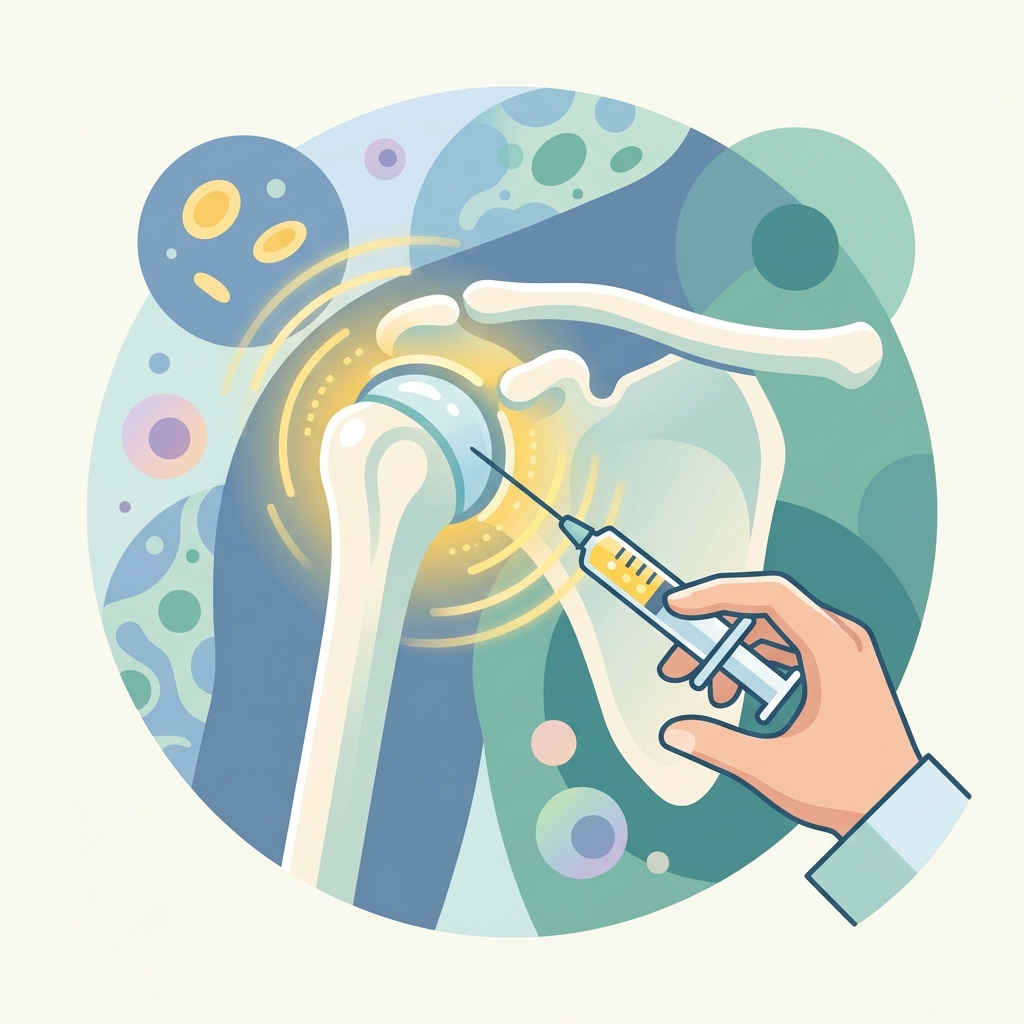
- Guidance: The doctor will typically use ultrasound guidance to ensure the needle is precisely positioned inside the shoulder joint.
- Injection: The prepared PRP is slowly injected into the joint.
The injection itself takes only a few minutes, and a small bandage is placed over the injection site.
Q6. Is the PRP injection painful, and is anesthesia used?
You will feel a pinch when the needle is inserted, and you may experience a feeling of pressure or mild discomfort as the PRP is injected into the joint. To minimize discomfort, a local anesthetic (numbing medicine) is often applied to the skin at the injection site. Some temporary soreness or aching in the shoulder is common for a few days after the procedure as the healing process begins.
Q7. What are the potential benefits of PRP compared to other injections like cortisone?
PRP offers several unique advantages when compared to traditional treatments:
- Natural Healing: PRP uses your own blood, eliminating the risk of allergic reactions or rejection.
- Longer-lasting Relief: While cortisone provides rapid, short-term pain relief, its effects often wear off in a few months. PRP takes longer to work but can provide more sustained pain relief and functional improvement.
- Joint Health: Cortisone can sometimes weaken local tissues or cartilage over time with repeated use, whereas PRP supports tissue health and joint environment.
Q8. How long does it take for a PRP injection to start working?
Unlike steroid injections which can work within days, PRP works by stimulating natural tissue healing and reducing inflammation over time. Most patients begin to feel improvement in their pain and shoulder mobility within 2 to 4 weeks after the injection. The benefits typically continue to build over the next few months as healing progresses.
Q9. How many PRP injections will I need for my shoulder osteoarthritis?
The number of injections depends on the severity of your osteoarthritis and your response to the treatment. Many patients experience significant relief from a single PRP injection. However, a series of 2 to 3 injections spaced several weeks apart is sometimes recommended to achieve the best results. Your healthcare team will customize a plan based on your progress.
Q10. What should I expect during the recovery period immediately after the injection?
Immediately after the procedure, you should plan to rest your shoulder:
- Soreness: Expect some mild-to-moderate soreness or a full feeling in the shoulder for 24 to 48 hours.
- Pain Relief: You can use cold packs on the shoulder for 15-20 minutes at a time to ease discomfort. Avoid anti-inflammatory medications (like ibuprofen or naproxen) as they can interfere with the PRP healing process. Tylenol is usually recommended for pain control.
- Rest: Limit heavy lifting, reaching, and overhead activities for the first few days.
Q11. Are there any risks or side effects associated with shoulder PRP injections?
Because PRP is made from your own blood, the risks are extremely low. However, as with any injection, there are minimal risks which include:
- Temporary pain or increased soreness at the injection site
- Minor bleeding or bruising
- Very low risk of infection
- Temporary stiffness in the shoulder joint
These side effects are typically mild and resolve within a few days.
Q12. Can I continue with my normal activities and exercise after a PRP injection?
You will need to temporarily modify your activities to give the PRP the best environment to work:
- First 48 Hours: Rest the shoulder and avoid strenuous activity.
- Weeks 1-2: Gradually resume light daily activities, but avoid heavy lifting, throwing, or overhead exercises.
- After Week 2: You can slowly return to your normal exercise routine as guided by your doctor or physical therapist.
Q13. Is physical therapy recommended after receiving a PRP injection?
Yes, physical therapy is highly recommended. Once the initial post-injection soreness resolves, a structured physical therapy program helps maximize the benefits of PRP. Physical therapy will focus on:
- Improving shoulder joint range of motion
- Strengthening the rotator cuff and shoulder blade muscles
- Improving joint stability and posture to reduce stress on the arthritic joint
This combined approach offers the best long-term outcomes.
Q14. Does insurance cover PRP injections for shoulder osteoarthritis?
Currently, most private insurance companies and government health plans (such as Medicare or provincial health plans) do not cover PRP injections, as they are often categorized as investigational or regenerative treatments. You should contact your insurance provider directly to verify coverage. Payment plans or out-of-pocket costs can be discussed with the clinic.
Q15. What is the success rate or long-term effectiveness of PRP for shoulder osteoarthritis?
Clinical studies show that PRP injections can significantly reduce pain and improve shoulder function for up to 6 to 12 months, and sometimes longer, in patients with mild-to-moderate osteoarthritis. While PRP is not a cure for osteoarthritis and cannot reverse joint damage, it is a highly effective tool for managing symptoms, improving quality of life, and delaying the need for more invasive surgical procedures.
We encourage you to write down any specific questions you have and discuss them thoroughly with your surgeon, doctor, or physical therapist. They are your best resource for personalized advice and care.
Disclaimer: This brochure provides general information and is not a substitute for professional medical advice. Always consult your doctor or qualified healthcare provider with any questions you may have regarding your specific medical condition and treatment plan.

Related articles
Browse all articlesTrusted External Resources
Curated educational materials to help you make informed decisions about your orthopaedic bone & joint conditions.

Orthopaedia

Orthogate Patient Education