
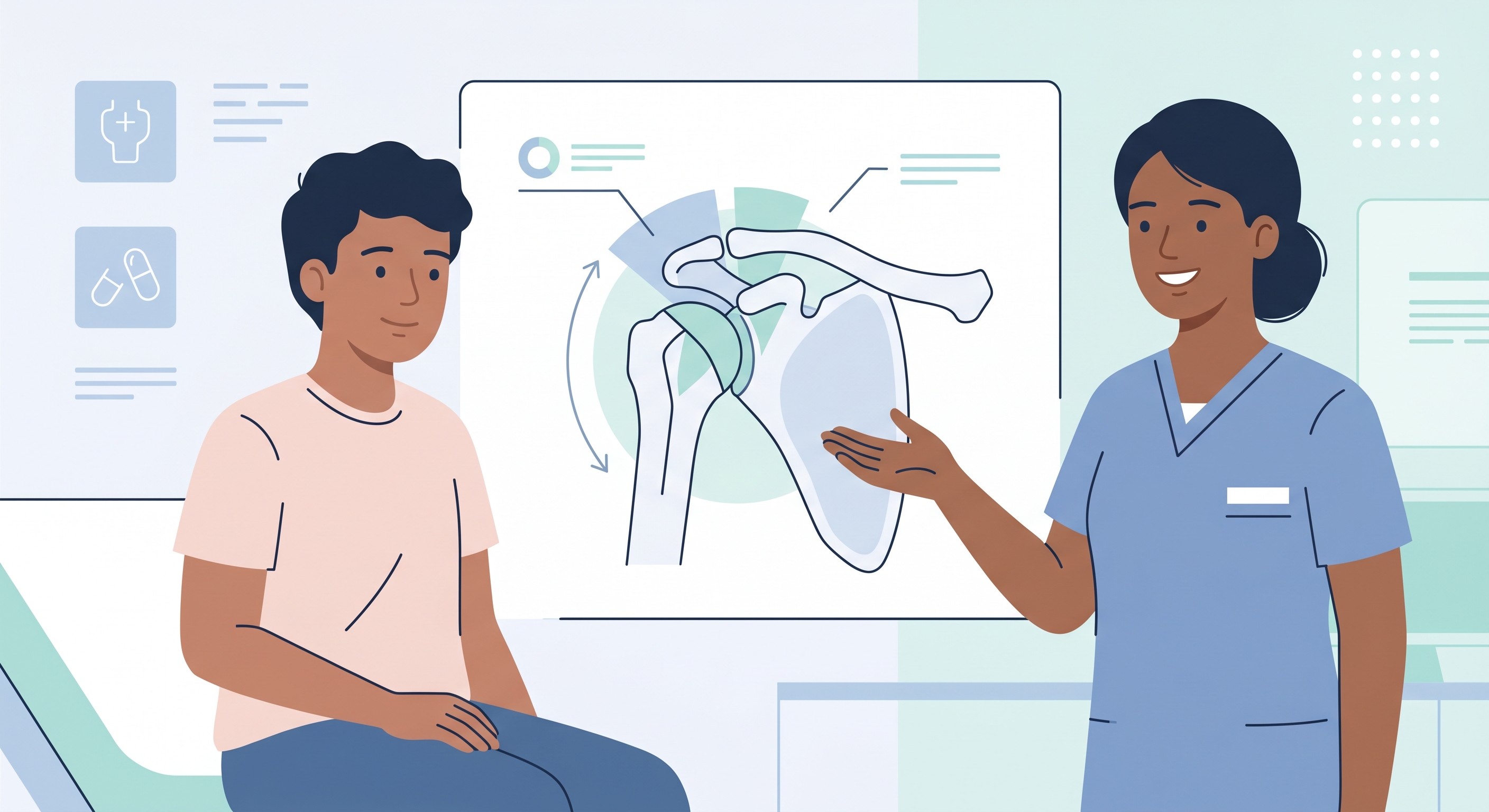
AC Joint Separation
Get Clear, Concise Answers to Your Top Questions About AC Joint Separation
This brochure provides general information and is not a substitute for professional medical advice. Always consult your doctor or qualified healthcare provider with any questions you may have regarding your specific medical condition and treatment plan.
The acromioclavicular (AC) joint is located at the top of your shoulder, where your collarbone (clavicle) meets the highest part of your shoulder blade (acromion). An AC joint separation, also known as a shoulder separation, occurs when the ligaments holding these two bones together are injured.
Q1: What is an AC Joint Separation?
An AC joint separation is an injury to the ligaments that connect your collarbone (clavicle) to your shoulder blade (scapula) at the top of your shoulder. These ligaments can be stretched, partially torn, or completely torn, causing the bones to separate.
Q2: What typically causes an AC Joint Separation?
Most AC joint separations are caused by a direct blow to the "point" of the shoulder, such as falling directly onto your shoulder, or by falling onto an outstretched hand. This is common in contact sports or activities where falls are frequent.
Q3: What are the common symptoms of an AC Joint Separation?
Common symptoms include:
- Pain at the top of your shoulder.
- Tenderness to touch around the AC joint.
- Swelling and bruising in the shoulder area.
- A visible bump or deformity on top of the shoulder (especially in more severe cases).
- Limited shoulder movement, especially when trying to lift your arm.
- Weakness or instability in the shoulder and arm.
- Sometimes, a popping sound at the time of injury.
Q4: How is an AC Joint Separation diagnosed?
Your doctor will typically diagnose an AC joint separation by reviewing your medical history and performing a physical examination of your shoulder. They will check for tenderness, swelling, and any visible deformity. X-rays are usually taken to confirm the diagnosis and rule out other injuries like a fracture. Sometimes, special "stress" X-rays (holding a weight) may be used to show the extent of the separation.
Q5: What are the different grades of AC Joint Separation?
AC joint separations are graded based on the severity of the ligament damage and bone displacement:
- Grade 1: Mildest injury, where the AC ligaments are stretched but not torn. Bones remain in place.
- Grade 2: The AC ligaments are partially torn, and there may be a slight separation or bump.
- Grade 3: Complete tearing of both the AC and coracoclavicular (CC) ligaments, resulting in a noticeable separation and bump.
- Grades 4-6: More severe and less common injuries with significant displacement of the collarbone.
Q6: What are the non-surgical treatment options?
Most AC joint separations (especially Grades 1, 2, and many Grade 3s) can be treated without surgery. Non-surgical treatment usually involves:
- Rest: Limiting activities that cause pain.
- Sling: Wearing a sling or shoulder immobilizer for a few days to several weeks to support the shoulder and promote healing.
- Ice: Applying ice to the area to reduce pain and swelling.
- Pain Medication: Over-the-counter pain relievers like ibuprofen or naproxen.
- Physical Therapy: Starting rehabilitation exercises once pain decreases to restore movement and strength.
Q7: When is surgery considered for an AC Joint Separation?
Surgery is typically considered for more severe AC joint separations (Grade 4, 5, 6), or for Grade 3 injuries that cause persistent pain, significant instability, or are in highly active individuals (like athletes or manual laborers) who need to regain full shoulder function.
Q8: What does AC Joint surgery involve?
AC joint surgery aims to restore the correct position of the collarbone and reconstruct or repair the torn ligaments. This can be done using various techniques, sometimes involving small incisions (arthroscopic) or a larger incision (open surgery). Your surgeon will discuss the specific procedure recommended for your injury.
Q9: What are the potential risks of AC Joint surgery?
As with any surgery, there are potential risks, including:
- Infection.
- Stiffness in the shoulder.
- Recurrent instability or persistent pain.
- Hardware-related issues (if implants are used).
- Nerve or blood vessel damage (rare).
Q10: What do I need to do before treatment/surgery?
Before treatment, follow your doctor's specific instructions. This may include resting your shoulder, icing, and taking prescribed medications. If surgery is planned, you may need to:
- Stop certain medications (e.g., blood thinners) as advised by your doctor.
- Avoid eating or drinking for a specific period before surgery.
- Arrange for someone to drive you home after the procedure.
Q11: What can I expect immediately after treatment/surgery?
- Non-surgical: You will likely wear a sling and continue with rest, ice, and pain medication. You'll gradually start gentle exercises as pain allows.
- Surgical: You will likely have your arm in a sling for several weeks. You will experience some pain and discomfort, managed with medication. Swelling and bruising are also common.
Q12: How long is the typical recovery period?
Recovery time varies greatly depending on the severity of the injury and whether you have surgery.
- Non-surgical: Grade 1 injuries may feel better in 1-2 weeks. Grade 2 injuries typically take 2-4 weeks. Grade 3 injuries can take 6-12 weeks or more.
- Surgical: Full recovery can take 4-6 months, sometimes longer, especially for a complete return to strenuous activities or manual labor.
Q13: What does rehabilitation/physical therapy involve?
Rehabilitation is crucial for a successful recovery. It typically progresses through phases:
- Early Phase: Focuses on pain control, protecting the healing joint (with a sling), and maintaining passive range of motion.
- Intermediate Phase: Gradually increasing active range of motion and beginning gentle strengthening exercises for the shoulder and surrounding muscles.
- Advanced Phase: Progressing to more challenging strengthening, stability, and sport-specific or activity-specific exercises.
Q14: How will pain be managed during recovery?
Pain will be managed with a combination of methods:
- Ice: Applying ice packs to reduce inflammation and numb the area.
- Medication: Over-the-counter pain relievers (e.g., ibuprofen, acetaminophen) or prescription pain medication as needed.
- Rest: Avoiding activities that worsen your pain.
- Physical Therapy: Specific exercises can help reduce pain and improve function.
Q15: What warning signs should I watch out for and report to my doctor immediately?
Contact your doctor immediately if you experience:
- Severe or worsening pain that isn't relieved by medication.
- New or increased numbness, tingling, or weakness in your arm or hand.
- Signs of infection: fever, chills, increased redness, warmth, swelling, or pus from any incision.
- Your arm or hand becoming cool, pale, or changing color.
- Inability to move your arm at all.
- Your sling feeling too tight or causing significant discomfort.
We encourage you to write down any specific questions you have and discuss them thoroughly with your surgeon, doctor, or physical therapist. They are your best resource for personalized advice and care.
Disclaimer: This brochure provides general information and is not a substitute for professional medical advice. Always consult your doctor or qualified healthcare provider with any questions you may have regarding your specific medical condition and treatment plan.

Related articles
Browse all articlesTrusted External Resources
Curated educational materials to help you make informed decisions about your orthopaedic bone & joint conditions.
Orthopaedia
Orthogate Patient Education