
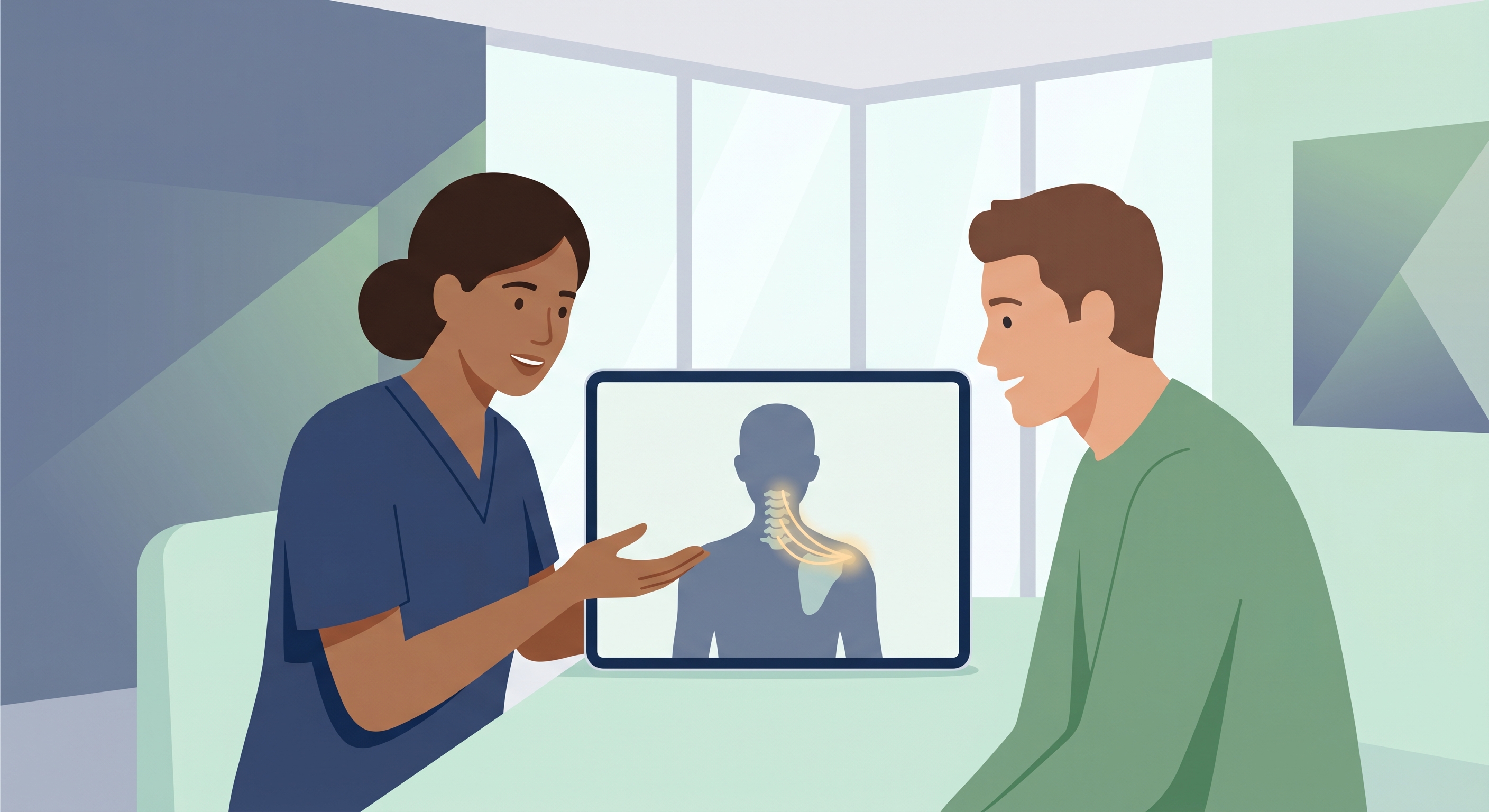
Referred Shoulder Pain from Your Neck
Get Clear, Concise Answers to Your Top Questions About Referred Shoulder Pain from Your Neck
This brochure is designed to help you understand referred shoulder pain originating from your neck. It will answer common questions about your condition, treatment options, and recovery process.
Q1: What is referred shoulder pain from the neck?
Referred shoulder pain means that the pain you feel in your shoulder is actually coming from a problem in your neck. This happens because nerves that start in your neck travel down into your shoulder and arm. When these nerves are irritated or compressed in your neck, your brain can "misinterpret" the pain signal and feel it in your shoulder.
Q2: What causes referred shoulder pain from the neck?
Several factors can cause referred shoulder pain from the neck, including:
- Pinched nerve (Cervical Radiculopathy): This is a common cause, where a nerve in your neck gets compressed or irritated, often due to a herniated disc (a "slipped" disc) or bone spurs.
- Cervical Spondylosis: Age-related wear and tear in the neck (arthritis of the spine) can narrow the spaces where nerves exit, leading to compression.
- Muscle Tension: Tight or strained muscles in your neck and upper back can refer pain to the shoulder. This is often linked to poor posture or stress.
- Injuries: Whiplash or other neck injuries can damage the muscles, ligaments, or discs in your neck, leading to referred pain.
Q3: What are common symptoms of referred shoulder pain from the neck?
Symptoms can vary, but often include:
- Pain that radiates (travels) down your arm, sometimes with tingling, numbness, or weakness in your arm or hand.
- Pain that feels deep or achy in your shoulder blade or upper outer arm.
- Pain that gets worse with certain neck movements (like turning your head, looking up, or tilting it).
- Pain that is NOT made worse by moving your shoulder directly.
- A feeling of heaviness or fatigue in the arm.
Q4: How is referred shoulder pain from the neck diagnosed?
Your doctor will usually diagnose referred shoulder pain from the neck through:
- A thorough physical exam: They will check your neck and shoulder movement, strength, and sensation. They may perform specific tests to see if neck movements reproduce your shoulder pain.
- Your medical history: They will ask about your symptoms, when they started, and what makes them better or worse.
- Imaging tests: X-rays can show bone changes like arthritis. MRI scans provide detailed images of soft tissues, including discs and nerves, to identify compression.
- Nerve tests (EMG/Nerve Conduction Study): These tests can help pinpoint which nerves are affected and how severely.
- Diagnostic injections: Sometimes, an injection of medication near a suspected nerve can help confirm if that nerve is the source of your pain.
Q5: What are non-surgical treatment options?
Most cases of referred shoulder pain from the neck can be managed without surgery. Common non-surgical treatments include:
- Rest and Activity Modification: Avoiding activities that worsen your pain, especially those involving extreme neck positions or heavy lifting.
- Medications:
- Over-the-counter pain relievers (like ibuprofen or acetaminophen) to reduce pain and inflammation.
- Prescription anti-inflammatory medications (NSAIDs).
- Muscle relaxants.
- In some cases, stronger pain medications may be prescribed for short periods.
- Physical Therapy: A physical therapist will teach you exercises to improve neck posture, strengthen neck and shoulder muscles, increase flexibility, and reduce nerve irritation.
- Heat and Cold Therapy: Applying ice packs can reduce inflammation, while heat pads can relax tense muscles.
- Corticosteroid Injections: These injections deliver powerful anti-inflammatory medicine directly to the area around the irritated nerve. They can provide significant, though often temporary, pain relief.
- Posture Correction and Ergonomics: Learning proper posture and making adjustments to your workspace can help reduce strain on your neck.
Q6: Are there surgical options for referred shoulder pain from the neck?
Surgery is typically considered if non-surgical treatments haven't provided relief, or if there's significant nerve compression causing progressive weakness, numbness, or loss of function. Surgical procedures aim to relieve pressure on the compressed nerves. Common types include:
- Anterior Cervical Discectomy and Fusion (ACDF): This involves removing the damaged disc and fusing the vertebrae together to stabilize the spine.
- Posterior Cervical Laminoforaminotomy: This procedure removes a small portion of bone to create more space for the nerve root. The specific surgery will depend on the exact cause and location of your nerve compression.
Q7: What does the surgical procedure involve (briefly)?
The specific procedure varies, but generally, the surgeon will make an incision in your neck. They will then carefully access the spine to remove whatever is compressing the nerve (e.g., a herniated disc, bone spur). In some cases, a small plate and screws or a bone graft may be used to stabilize the spine.
Q8: What are the potential risks of surgery?
Like any surgery, neck surgery carries potential risks, including:
- Infection
- Bleeding
- Damage to nerves or the spinal cord
- Reaction to anesthesia
- Failure to relieve symptoms
- Need for further surgery
Your surgeon will discuss these risks with you in detail.
Q9: What do I need to do before treatment/surgery?
Before treatment or surgery, your doctor will provide specific instructions. This may include:
- Stopping certain medications (e.g., blood thinners).
- Avoiding food or drink before surgery.
- Arranging for someone to drive you home after an appointment or surgery.
- Making your home recovery-friendly (if surgery is planned).
- Discussing any questions or concerns you have with your healthcare team.
Q10: What can I expect immediately after treatment/surgery?
- Non-surgical treatment: You may experience some immediate relief, but it often takes time and consistent effort with physical therapy to see significant improvement.
- After surgery: You will likely experience some neck pain and stiffness. You will receive pain medication to manage discomfort. You may need to wear a neck brace or collar for a period to help with healing and stability. Nurses will help you with early movements and getting out of bed.
Q11: How long is the typical recovery period?
- Non-surgical treatment: Improvement can be gradual, often taking several weeks to months. Consistency with your home exercise program is key.
- After surgery: Initial recovery may take several weeks. Full recovery, including regaining strength and flexibility, can take several months (3-6 months or more), depending on the complexity of the surgery and your individual response.
Q12: What does rehabilitation/physical therapy involve?
Physical therapy is a crucial part of recovery. It typically involves:
- Pain management techniques: Using modalities like heat, ice, or electrical stimulation.
- Gentle range of motion exercises: To restore movement in your neck and shoulder.
- Strengthening exercises: To build strength in your neck, shoulder, and core muscles to support your spine.
- Stretching: To improve flexibility and reduce muscle tightness.
- Postural education: To help you maintain proper alignment and prevent future issues.
- Gradual return to activity: Your therapist will guide you on safely increasing your activity levels.
Q13: How will pain be managed?
Pain management will be tailored to your needs. It may include:
- Over-the-counter or prescription pain medications.
- Anti-inflammatory drugs.
- Muscle relaxants.
- Nerve pain medications.
- Ice and heat therapy.
- Physical therapy techniques.
Q14: What can I do at home to help my recovery?
- Follow all instructions from your doctor and physical therapist.
- Take medications as prescribed.
- Apply ice or heat as recommended.
- Perform your home exercise program consistently.
- Maintain good posture, especially when sitting or using electronic devices.
- Get adequate rest.
- Avoid activities that worsen your pain.
Q15: What signs or symptoms should I watch out for and report to my doctor immediately?
Contact your doctor immediately if you experience:
- Sudden or severe worsening of pain.
- New or increasing numbness, tingling, or weakness in your arm or hand.
- Loss of bladder or bowel control.
- Fever or chills (especially after surgery).
- Redness, swelling, or drainage from a surgical incision.
- Any other concerning or unexpected symptoms.
Long-Term Outlook
Many people with referred shoulder pain from the neck experience significant improvement with proper diagnosis and treatment. The long-term outlook depends on the underlying cause, your adherence to the treatment plan, and your overall health. Some people may experience recurrent episodes, especially if lifestyle factors like posture are not addressed.
We encourage you to write down any specific questions you have and discuss them thoroughly with your surgeon, doctor, or physical therapist. They are your best resource for personalized advice and care.
Disclaimer: This brochure provides general information and is not a substitute for professional medical advice. Always consult your doctor or qualified healthcare provider with any questions you may have regarding your specific medical condition and treatment plan.

Related articles
Browse all articlesTrusted External Resources
Curated educational materials to help you make informed decisions about your orthopaedic bone & joint conditions.

Orthopaedia

Orthogate Patient Education