
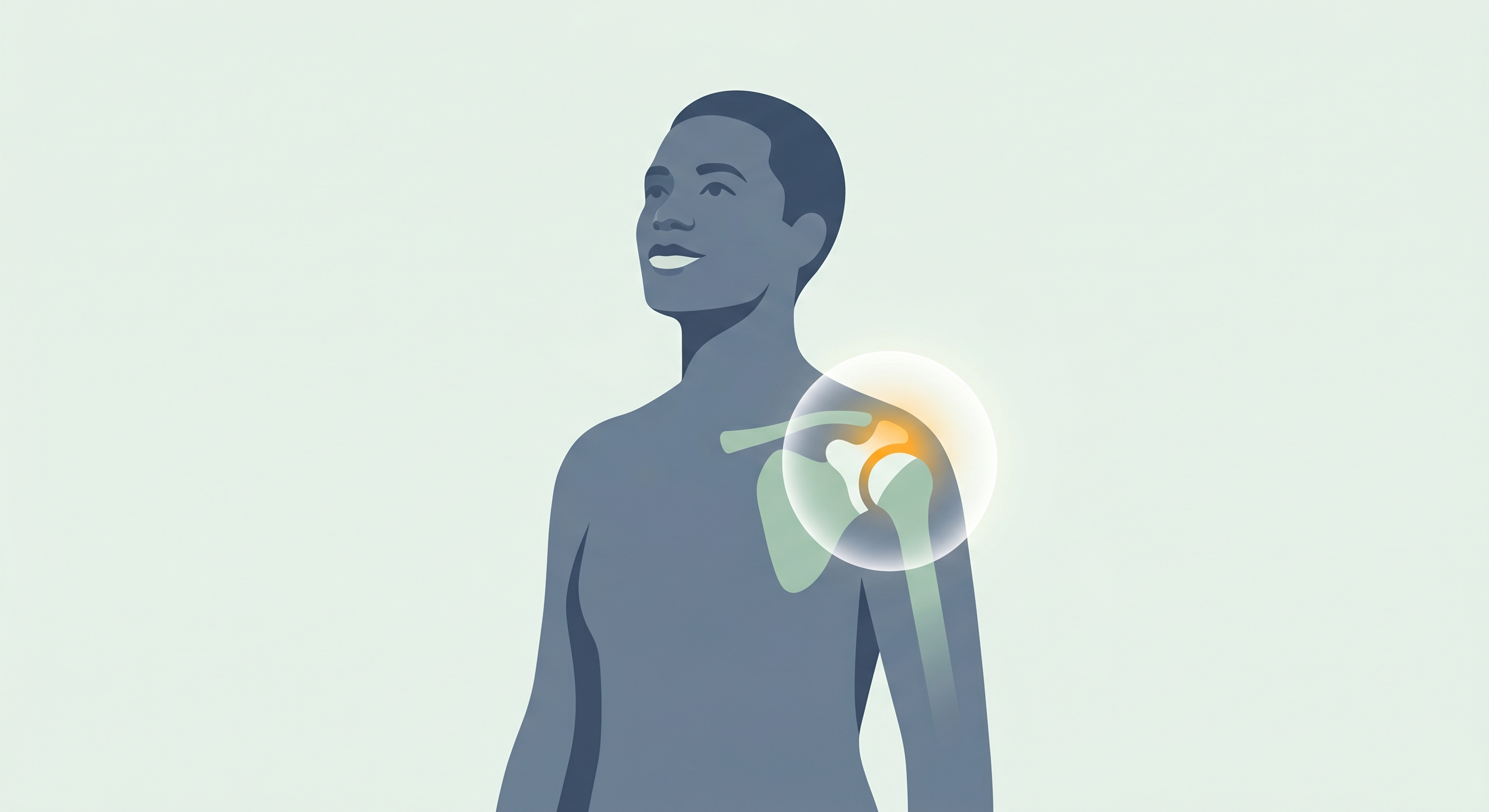
Subcoracoid Impingement Syndrome
Get Clear, Concise Answers to Your Top Questions About Subcoracoid Impingement Syndrome
Q1: What is Subcoracoid Impingement Syndrome?
Subcoracoid impingement syndrome is a painful shoulder condition where the soft tissues in the front of your shoulder, specifically the subscapularis tendon (one of your rotator cuff muscles) and sometimes the bursa (a fluid-filled sac that reduces friction), get pinched between two bones: the coracoid process (a bony projection from your shoulder blade) and the lesser tuberosity (a part of your upper arm bone, the humerus). This pinching causes pain and inflammation.
Q2: What causes Subcoracoid Impingement Syndrome?
This condition can be caused by a combination of factors, including:
- Anatomical Variations: Some people naturally have a smaller space between the coracoid and the humerus.
- Overuse and Repetitive Activities: Especially overhead activities in sports (like throwing or swimming) or certain occupations.
- Poor Posture: Hunching or slumping can narrow the space.
- Muscle Imbalances: Weakness in your rotator cuff or scapular (shoulder blade) muscles.
- Bone Spurs: Abnormal bone growths that can narrow the space.
- Trauma or Previous Injuries: Shoulder injuries can sometimes contribute.
- Degenerative Changes: Wear and tear over time, often with age.
Q3: What are the common symptoms?
The main symptom is pain in the front of your shoulder, which can sometimes radiate into your upper arm. This pain often worsens with certain arm movements, especially:
- Reaching across your body.
- Lifting your arm forward and inward (like putting on a seatbelt).
- Sleeping on the affected side.
- Pain during internal rotation of the arm.
You might also experience weakness in your shoulder or a feeling of stiffness.
Q4: How is it diagnosed?
Your doctor will diagnose subcoracoid impingement syndrome based on:
- Your Medical History: Asking about your symptoms, activities, and any past injuries.
- Physical Examination: Your doctor will move your arm in different directions to assess your range of motion, pinpoint painful areas, and check for muscle weakness. Specific tests that involve moving your arm in certain positions may provoke your symptoms.
- Imaging Tests:
- X-rays: To check for bone spurs or other bone abnormalities.
- MRI (Magnetic Resonance Imaging): Provides detailed images of soft tissues and can show inflammation, fluid buildup in the bursa, or tears in the subscapularis tendon. Sometimes a special dye (arthrogram) is injected to get a clearer picture.
- Ultrasound: Can be used to dynamically visualize the impingement during movement.
Q5: What are the non-surgical treatment options?
Non-surgical treatments are usually the first approach and aim to reduce pain and inflammation, improve motion, and strengthen your shoulder. These include:
- Rest and Activity Modification: Avoiding activities that worsen your pain, especially overhead or repetitive movements.
- NSAIDs (Nonsteroidal Anti-inflammatory Drugs): Over-the-counter medications like ibuprofen or naproxen can help reduce pain and swelling.
- Physical Therapy: A physical therapist will design a program to:
- Improve your shoulder's range of motion.
- Strengthen your rotator cuff and shoulder blade muscles.
- Correct posture and movement patterns.
- Reduce stiffness and scar tissue.
- Corticosteroid Injections: A powerful anti-inflammatory medication injected directly into the subcoracoid space to reduce pain and swelling. These are typically used for short-term relief and are not a long-term solution.
Q6: What does physical therapy involve?
Physical therapy for subcoracoid impingement focuses on:
- Pain Relief: Using modalities like ice, heat, or manual therapy.
- Stretching: To improve shoulder flexibility and reduce tightness in surrounding muscles (e.g., chest stretches).
- Strengthening Exercises: Targeting the rotator cuff muscles (especially the subscapularis) and muscles that stabilize your shoulder blade. These might involve resistance bands or light weights.
- Posture Correction: Learning to maintain good posture to create more space in your shoulder.
- Movement Retraining: Modifying how you move your arm during daily activities to avoid impingement.
Q7: When is surgery considered?
Surgery is usually considered if non-surgical treatments have not provided significant relief after a few months (typically 3-6 months) and your pain continues to limit your daily activities.
Q8: What does the surgical procedure involve?
The most common surgical procedure for subcoracoid impingement is called an arthroscopic coracoid decompression or coracoplasty. This is a minimally invasive "keyhole" surgery performed through small incisions.
- A small camera (arthroscope) is inserted into your shoulder joint, allowing the surgeon to see inside.
- Tiny instruments are used to carefully remove any bone spurs from the coracoid process or lesser tuberosity, or to reshape a prominent coracoid, creating more space for the soft tissues.
- Inflamed bursa or damaged soft tissue might also be removed or repaired. The goal is to relieve the pinching and reduce pain.
Q9: What are the potential risks of surgery?
While generally safe, all surgeries have potential risks, including:
- Infection
- Bleeding
- Stiffness in the shoulder (frozen shoulder)
- Nerve or blood vessel damage (rare)
- Persistent pain or incomplete relief
- Anesthesia risks
- Failure to improve symptoms, potentially requiring further treatment.
Your surgeon will discuss these risks with you in detail.
Q10: What do I need to do before surgery?
Your surgeon will give you specific instructions, but generally, you may need to:
- Undergo pre-operative tests (blood work, EKG, etc.).
- Stop taking certain medications (like blood thinners or NSAIDs) a week or two before surgery.
- Arrange for someone to drive you home after surgery and help you for the first few days.
- Follow fasting instructions (no food or drink after midnight) on the day before surgery.
Q11: What can I expect immediately after surgery?
- You will likely feel tired and your shoulder will be sore and swollen.
- Pain medication will be prescribed to manage discomfort.
- Your arm will usually be placed in a sling for a period, typically 1 to 6 weeks, to protect the shoulder. You'll be instructed on when and how to remove it for dressing and physical therapy.
- You may experience some numbness in your arm from nerve blocks, which will wear off.
- Your surgeon will discuss the findings during surgery.
Q12: How long is the typical recovery period?
Recovery time varies for each person, but generally:
- Initial Healing: 1-6 weeks with the sling.
- Physical Therapy: Often starts within 1-2 weeks after surgery and can last for 3-6 months, or even longer depending on the extent of the procedure and your individual progress.
- Return to Daily Activities: Easier daily activities may resume in 2-3 weeks.
- Return to Work: Desk jobs often within 2-3 weeks; jobs requiring lifting or strenuous arm use may need 3-4 months.
- Return to Sports: Low-risk activities around 3 months; full return to overhead or contact sports can take 6 months or more.
Consistency with your physical therapy is crucial for a good recovery.
Q13: How will pain be managed?
Pain management after surgery typically involves a combination of:
- Prescription Pain Medications: Often stronger pain relievers for the initial days, transitioning to over-the-counter options.
- NSAIDs: To reduce pain and inflammation.
- Ice Packs: Applying ice to the shoulder can significantly help reduce swelling and pain.
- Positioning: Finding comfortable sleeping positions, often using pillows to support your arm.
Q14: What can I do at home to help my recovery?
- Follow Doctor's Orders: Adhere strictly to medication schedules, sling use, and activity restrictions.
- Ice and Elevation: Regularly apply ice packs to your shoulder to reduce swelling and pain. Elevate your arm when resting, if advised.
- Gentle Movement (as directed): Even in a sling, your physical therapist may guide you on very gentle movements to prevent stiffness.
- Nutrition: Eat a healthy diet to support healing.
- Rest: Get plenty of rest to allow your body to heal.
- Avoid Overuse: Do not push through pain or attempt activities before your doctor or therapist clears you.
Q15: What is the expected long-term outcome?
For most patients, both non-surgical treatment (especially with dedicated physical therapy) and surgical intervention for subcoracoid impingement syndrome lead to good long-term outcomes, with significant reduction in pain and improvement in shoulder function. The success rate for surgery is often high, with many patients reporting high satisfaction. However, individual results can vary based on the severity of the condition, adherence to rehabilitation, and the presence of other shoulder issues. Long-term dedication to maintaining shoulder strength and flexibility is key to preventing recurrence.
We encourage you to write down any specific questions you have and discuss them thoroughly with your surgeon, doctor, or physical therapist. They are your best resource for personalized advice and care.
Disclaimer: This brochure provides general information and is not a substitute for professional medical advice. Always consult your doctor or qualified healthcare provider with any questions you may have regarding your specific medical condition and treatment plan.

Related articles
Browse all articlesTrusted External Resources
Curated educational materials to help you make informed decisions about your orthopaedic bone & joint conditions.

Orthopaedia
Orthogate Patient Education