
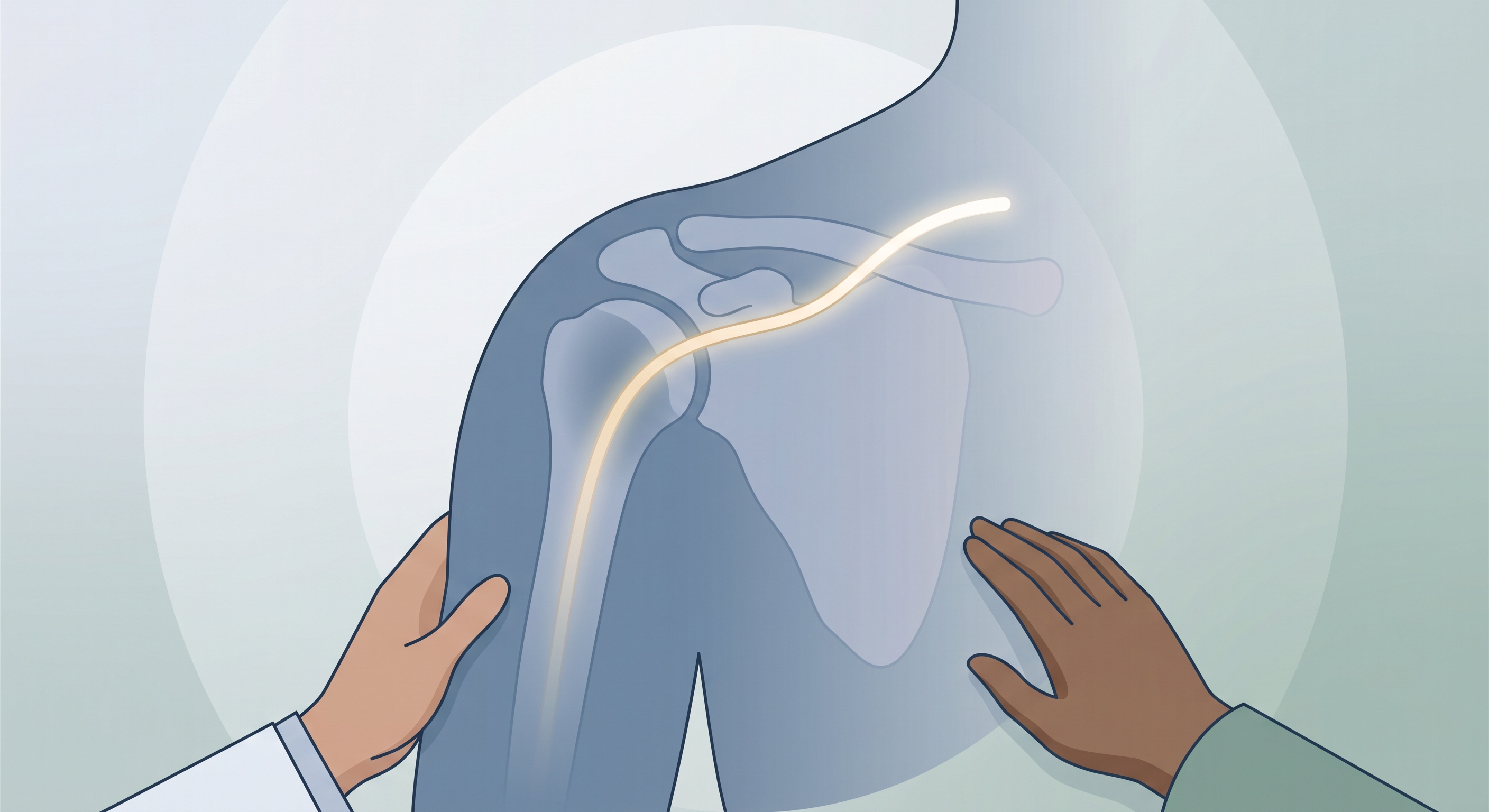
Suprascapular Neuropathy
Get Clear, Concise Answers to Your Top Questions About Suprascapular Neuropathy
Q1: What is Suprascapular Neuropathy?
Suprascapular neuropathy is a condition where the suprascapular nerve, a nerve in your shoulder, becomes irritated, compressed, or stretched. This can lead to pain, weakness, and sometimes muscle shrinking (atrophy) in your shoulder.
Q2: What causes Suprascapular Neuropathy?
It's often caused by the nerve being compressed or stretched as it travels through tight spaces in the shoulder blade (scapula). This can happen due to:
- Compression: Cysts (fluid-filled sacs), bony spurs, or tight ligaments can press on the nerve.
- Traction (Stretching): Repetitive overhead activities (common in athletes like volleyball players, swimmers, or weightlifters), direct trauma, or shoulder instability can stretch the nerve.
- Other conditions: Sometimes, it can be linked to rotator cuff tears or other shoulder injuries.
Q3: What are the common symptoms?
Common symptoms include:
- Dull, aching pain over the top and back of the shoulder.
- Weakness when lifting your arm out to the side or rotating it outwards.
- Muscle shrinking (atrophy) in the muscles on top and/or back of your shoulder blade.
- Sometimes, pain can radiate to the neck or down the arm.
- In some cases, weakness may be the main symptom without significant pain.
Q4: How is Suprascapular Neuropathy diagnosed?
Diagnosis usually involves:
- Medical History and Physical Exam: Your doctor will ask about your symptoms and activities and examine your shoulder for pain, weakness, and muscle atrophy.
- Electrodiagnostic Tests (EMG and NCS): These tests measure how well your nerves and muscles are working and are considered the "gold standard" for diagnosis.
- Imaging Tests: MRI (Magnetic Resonance Imaging) can help identify cysts or other structures compressing the nerve and show if there's muscle atrophy. X-rays may be used to rule out bone issues.
- Diagnostic Injection: Sometimes, an injection of anesthetic near the nerve can temporarily relieve symptoms, helping to confirm the diagnosis.
Q5: What are the non-surgical treatment options?
Initial treatment often focuses on conservative (non-surgical) methods, including:
- Rest and Activity Modification: Avoiding activities that worsen your symptoms.
- Medications: Over-the-counter pain relievers like NSAIDs (non-steroidal anti-inflammatory drugs) to reduce pain and inflammation.
- Physical Therapy: Exercises to improve shoulder flexibility, strengthen rotator cuff muscles and other shoulder blade muscles, and correct posture.
- Nerve Blocks: Injections that temporarily numb the nerve to provide pain relief.
Q6: When is surgery considered?
Surgery is usually considered if:
- Non-surgical treatments haven't helped after 6-12 months.
- There's a clear cause of compression, like a cyst or tight ligament, that needs to be removed.
- Symptoms are severe or rapidly worsening.
Q7: What does the surgical procedure involve?
The most common surgery is a suprascapular nerve decompression (or release). This procedure aims to relieve pressure on the nerve. It's often done using:
- Arthroscopy (minimally invasive): Small incisions are made, and a tiny camera and instruments are used to view and release the nerve. This often means less pain and a faster recovery.
- Open surgery: In some cases, a larger incision may be needed. The surgeon will identify the area where the nerve is compressed and release or remove the compressing tissue (like a ligament or cyst). They may also address any other shoulder problems found.
Q8: What are the potential risks of surgery?
As with any surgery, there are risks, though they are generally low for suprascapular nerve decompression. These can include:
- Infection
- Bleeding
- Damage to surrounding nerves or blood vessels
- Adverse reactions to anesthesia
- Persistent pain or incomplete relief of symptoms
- Shoulder stiffness
Q9: What can I expect immediately after surgery?
- You will likely experience some pain and swelling, which can be managed with pain medication and ice packs.
- You may need to wear a sling for a few weeks to protect the shoulder and promote healing.
- Your surgeon will give you specific instructions for incision care.
Q10: How long is the typical recovery period?
Recovery time varies for each person.
- First few weeks: Focus on pain management, protecting the shoulder, and starting gentle range-of-motion exercises.
- 1-3 months: Progress to strengthening exercises with physical therapy.
- 3-6 months: Gradual return to more demanding activities. Complete recovery of pain relief and muscle strength can sometimes take up to a year, as nerve healing can be slow.
Q11: What does rehabilitation/physical therapy involve?
Physical therapy is crucial for recovery, whether you have surgery or not. It involves:
- Early Phase: Gentle range-of-motion exercises, often with assistance (e.g., using pulleys or a wand).
- Mid-Phase: Strengthening exercises for the rotator cuff, shoulder blade stabilizers, and surrounding muscles.
- Late Phase: Gradually progressing to more functional and sport-specific exercises, improving endurance and coordination. Your physical therapist will guide you through a personalized program.
Q12: How will pain be managed during recovery?
Your doctor will prescribe pain medication as needed, especially in the initial post-operative period. Over-the-counter pain relievers and ice packs can also help manage discomfort. Discuss any persistent or worsening pain with your healthcare team.
Q13: What can I do at home to help my recovery?
- Follow instructions: Adhere strictly to your doctor's and physical therapist's instructions regarding activity restrictions, exercises, and medication.
- Ice and elevate: Use ice packs as directed to reduce swelling and pain, especially after exercise.
- Medication adherence: Take prescribed medications as instructed.
- Gentle movement: Perform your prescribed home exercises regularly and correctly.
- Listen to your body: Don't push through sharp pain.
- Avoid aggravating activities: Be mindful of activities that worsen your symptoms.
Q14: When can I expect to return to daily activities, work, driving, sports, etc.?
This depends on your individual recovery, the severity of your condition, and the type of treatment.
- Daily Activities: Light daily activities like eating or dressing may be possible within days to a few weeks after surgery.
- Driving: Typically, you can drive once you are off strong pain medications and have sufficient control and range of motion in your shoulder to safely operate a vehicle. This often takes several weeks.
- Work: Return to work varies greatly. Light, desk-based work may be possible within a few weeks, while jobs requiring heavy lifting or repetitive arm movements will require a longer recovery, potentially months.
- Sports/Overhead Activities: Return to sports, especially overhead activities, is a gradual process and may take 3 to 6 months or more, under the guidance of your physical therapist and surgeon.
Q15: What signs or symptoms should I watch out for and report to my doctor immediately?
Contact your doctor immediately if you experience any of the following:
- Signs of infection: increasing redness, swelling, warmth, or pus around the incision site.
- Fever or chills.
- Severe or worsening pain that is not relieved by medication.
- New or increasing numbness, tingling, or weakness in your arm or hand.
- Excessive bleeding from the surgical site.
- New chest pain or shortness of breath.
We encourage you to write down any specific questions you have and discuss them thoroughly with your surgeon, doctor, or physical therapist. They are your best resource for personalized advice and care.
Disclaimer: This brochure provides general information and is not a substitute for professional medical advice. Always consult your doctor or qualified healthcare provider with any questions you may have regarding your specific medical condition and treatment plan.

Related articles
Browse all articlesTrusted External Resources
Curated educational materials to help you make informed decisions about your orthopaedic bone & joint conditions.

Orthopaedia

Orthogate Patient Education