
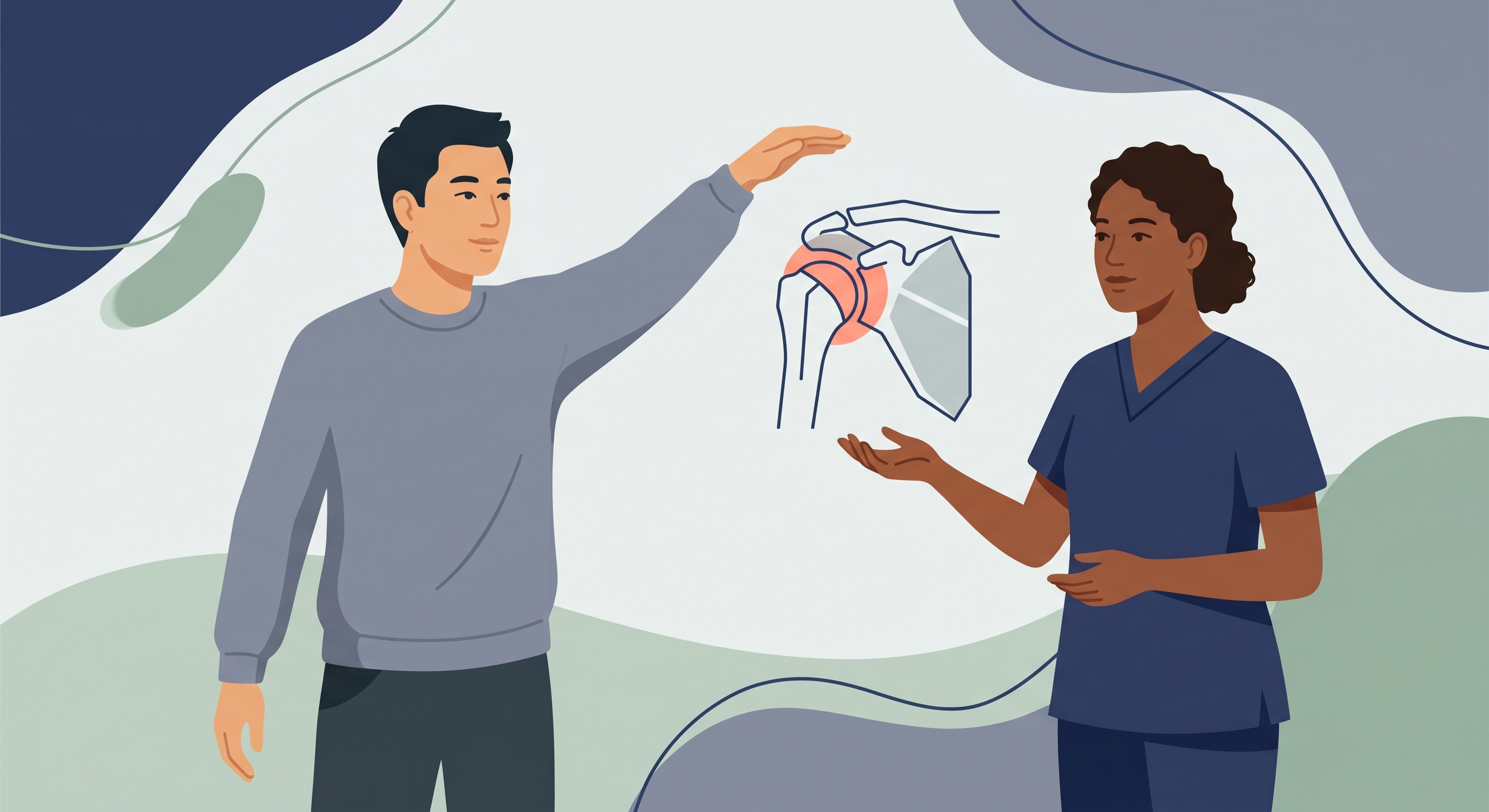
Shoulder Impingement Syndrome
Get Clear, Concise Answers to Your Top Questions About Shoulder Impingement Syndrome
Q1: What is Shoulder Impingement Syndrome?
Shoulder Impingement Syndrome happens when the tendons of your rotator cuff (a group of muscles and tendons that surround the shoulder joint) and/or the bursa (a fluid-filled sac that cushions the tendons) get pinched or squeezed between the bones in your shoulder. This usually occurs when you lift your arm, leading to pain and discomfort.
Q2: What causes Shoulder Impingement Syndrome?
It's often caused by repetitive overhead activities (like throwing, swimming, or painting), poor posture, or "wear and tear" over time. Sometimes, it can result from a sudden injury. Bone spurs or changes in the shape of the shoulder bones can also contribute to the narrowing of the space where the tendons pass.
Q3: What are the common symptoms of Shoulder Impingement Syndrome?
Common symptoms include:
- Pain at the top and outside of your shoulder.
- Pain that worsens when you lift your arm, especially above your head.
- Pain that may be worse at night or when lying on the affected side.
- Weakness in your arm.
- A grinding or catching sensation when moving your arm.
- Stiffness and limited range of motion.
Q4: How is Shoulder Impingement Syndrome diagnosed?
Diagnosis typically involves a thorough physical exam where your doctor will assess your pain, range of motion, and strength. They may also ask about your activities and how your symptoms started. X-rays are often taken to check for bone abnormalities or spurs. Sometimes, an MRI might be used to get a better look at the soft tissues like tendons and bursa.
Q5: What are the non-surgical treatment options?
Most cases of shoulder impingement respond well to non-surgical treatments. These include:
- Rest and activity modification: Avoiding activities that worsen your pain.
- Ice and heat: Applying ice packs to reduce inflammation, or heat to ease muscle stiffness.
- Pain relievers: Over-the-counter medications like ibuprofen or naproxen. Your doctor might prescribe stronger medications if needed.
- Physical therapy: A key part of recovery, focusing on exercises to improve shoulder strength, flexibility, and posture.
- Corticosteroid injections: A steroid injection into the shoulder joint can help reduce pain and inflammation, providing a window for physical therapy to be more effective.
Q6: What are the pros and cons of non-surgical treatment?
Pros: Non-surgical treatments are often very effective, less invasive, and avoid the risks associated with surgery. They focus on restoring natural shoulder function.
Cons: Recovery can take time, and consistent effort with exercises is required. Some severe cases may not fully respond to non-surgical approaches.
Q7: When is surgery considered for Shoulder Impingement Syndrome?
Surgery is typically considered if non-surgical treatments haven't significantly improved your symptoms after several months, or if there's evidence of significant rotator cuff damage that won't heal on its own.
Q8: What does shoulder impingement surgery involve?
The most common surgery for shoulder impingement is called arthroscopic subacromial decompression (also known as acromioplasty). This is a minimally invasive procedure where your surgeon uses a small camera and instruments inserted through tiny cuts to remove any inflamed bursa and shave off a small part of the acromion (the bone at the top of your shoulder blade) to create more space for your tendons.
Q9: What are the goals of surgery?
The main goals of surgery are to relieve pain, improve your shoulder's range of motion, and allow you to return to your normal activities without discomfort.
Q10: What are the potential risks of surgery?
As with any surgery, there are potential risks, though they are generally low. These can include:
- Infection
- Bleeding
- Stiffness or continued pain
- Nerve or blood vessel damage
- Complications from anesthesia
- Failure to fully relieve symptoms
Q11: What do I need to do before treatment/surgery?
- Follow your doctor's instructions: This might include stopping certain medications, especially blood thinners, before surgery.
- Arrange for support: If you're having surgery, plan for someone to drive you home and help you for the first few days.
- Prepare your home: Make sure frequently used items are within easy reach to avoid reaching overhead.
- Physical therapy: You might begin physical therapy even before surgery to improve your shoulder's condition.
Q12: What can I expect immediately after treatment/surgery and how long is recovery?
- Non-surgical: You may experience some soreness as you begin exercises. Pain relief should gradually improve over weeks to a few months.
- Surgical: You'll likely have some pain, managed with medication. You might wear a sling for a short period (a few days to a couple of weeks). Early movement is often encouraged.
- Recovery time: For non-surgical treatment, significant improvement can be seen in 6-12 weeks. For surgery, it can take 3-6 months or even longer for full recovery, with consistent physical therapy.
Q13: What does rehabilitation/physical therapy involve?
Physical therapy is crucial for recovery. It involves a personalized program of exercises to:
- Reduce pain and inflammation.
- Restore your shoulder's range of motion.
- Strengthen your rotator cuff and surrounding muscles.
- Improve posture and movement patterns. Your therapist will guide you through exercises and advise on when to progress.
Q14: When can I expect to return to daily activities, work, driving, and sports?
This varies greatly depending on the severity of your condition, the type of treatment, and your progress in physical therapy.
- Daily activities (e.g., dressing, eating): Often within days or a couple of weeks, with modifications.
- Driving: Typically a few weeks after surgery, once you are off strong pain medication and have sufficient control of your arm.
- Work: Sedentary jobs may allow a return in a few weeks; physically demanding jobs may require several months.
- Sports/overhead activities: Generally 3-6 months or more, and only when your surgeon and physical therapist clear you. Always listen to your body and avoid activities that cause pain.
Q15: What signs or symptoms should I watch out for and report to my doctor immediately?
Contact your doctor immediately if you experience:
- Sudden, severe, or worsening pain.
- Fever or chills.
- Redness, excessive swelling, or pus around the incision site (if applicable).
- Numbness or tingling in your arm or hand.
- Inability to move your arm at all.
- New or unexpected weakness.
We encourage you to write down any specific questions you have and discuss them thoroughly with your surgeon, doctor, or physical therapist. They are your best resource for personalized advice and care.
Disclaimer: This brochure provides general information and is not a substitute for professional medical advice. Always consult your doctor or qualified healthcare provider with any questions you may have regarding your specific medical condition and treatment plan.

Related articles
Browse all articlesTrusted External Resources
Curated educational materials to help you make informed decisions about your orthopaedic bone & joint conditions.

Orthopaedia

Orthogate Patient Education