Shoulder Impingement / Subacromial Pain Syndrome Protocol
Shoulder Impingement / Subacromial Pain Syndrome Protocol: A structured approach to address scapular dyskinesis and rotator cuff weakness without the need for subacromial decompression.
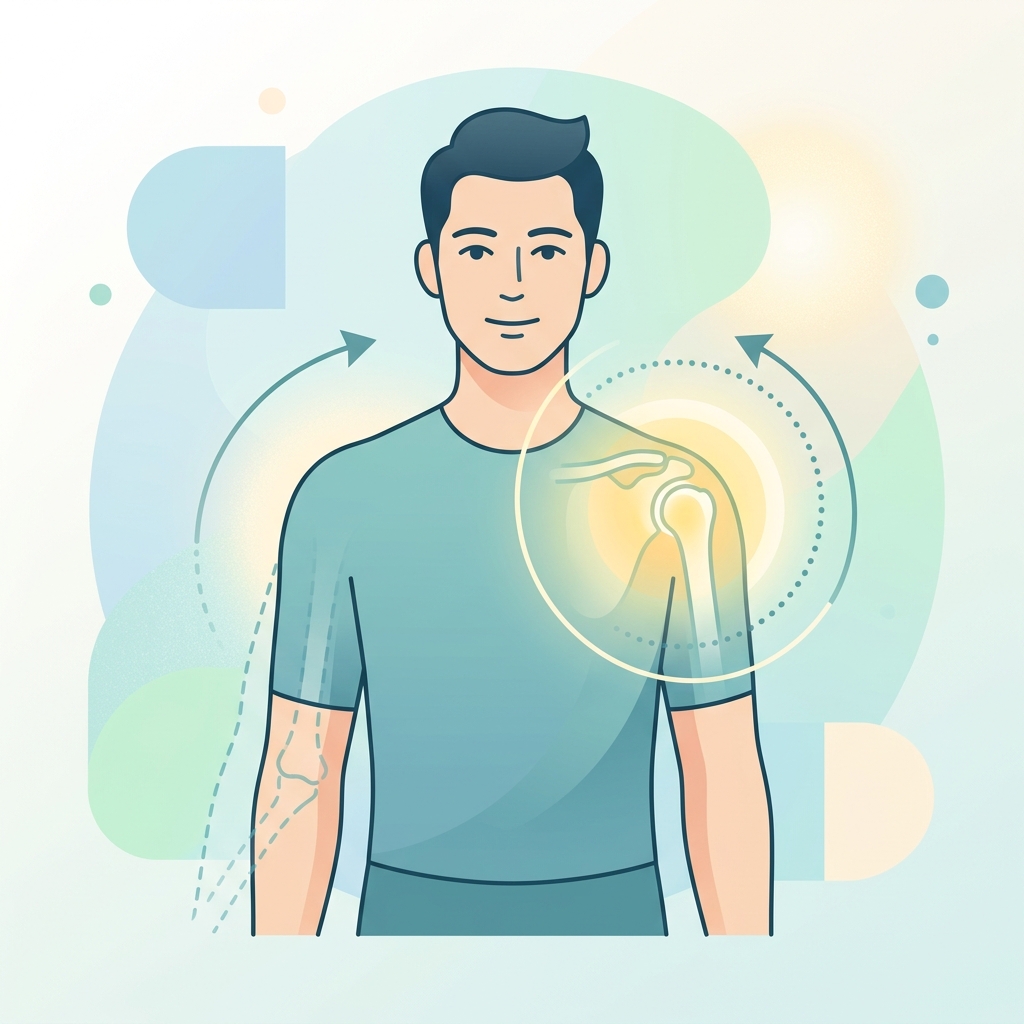
Shoulder Impingement, also known as Subacromial Pain Syndrome (SAPS), is a common cause of shoulder pain characterized by the compression or irritation of the rotator cuff tendons and subacromial bursa. Historically, surgical subacromial decompression was widely performed; however, high-quality clinical trials have shown that structured non-operative physical therapy is equally effective. This evidence-based protocol focuses on addressing underlying scapular dyskinesis (abnormal movement of the shoulder blade) and rotator cuff weakness. By restoring proper mechanics and muscle balance, patients can achieve full, pain-free shoulder function and avoid surgery.
Phase I: Pain Control, Inflammation Reduction, and Scapular Setting (Weeks 1-4)
Goals:
- Minimize subacromial pain and inflammation.
- Re-establish pain-free active-assisted range of motion (AAROM).
- Activate periscapular stabilizers (scapular setting).
- Initiate gentle isometric rotator cuff strengthening in neutral.
Precautions & Restrictions:
- Avoid overhead lifting, throwing, or activities that provoke impingement symptoms.
- Limit flexion and abduction past 90 degrees, especially with internal rotation.
- Avoid pushing through sharp, catching pain.
Suggested Exercises:
- Pendulum exercises (Codman's) for passive joint distraction.
- Active-assisted range of motion (AAROM) using a cane/pulley (flexion, abduction, external rotation in scapular plane).
- Scapular squeezes/retraction (squeezing shoulder blades together).
- Isometric rotator cuff exercises (external rotation, internal rotation, abduction against a wall or doorframe at neutral).
- Sleeper stretch (if posterior capsule tightness is present, performed gently).
Criteria to Progress:
- VAS pain score < 3/10 during daily life.
- Pain-free active-assisted range of motion (AAROM) to 120 degrees of flexion.
- Able to actively "set" and hold the scapula in retraction for 10 seconds.
Phase II: Rotator Cuff Strengthening & Scapular Re-education (Weeks 4-8)
Goals:
- Restore full active range of motion (AROM) without compensatory shoulder hiking.
- Progressive strengthening of the rotator cuff muscles.
- Enhance dynamic scapular stability and re-education.
- Normalize glenohumeral and scapulothoracic kinematics.
Precautions & Restrictions:
- Avoid heavy loading or lifting in the impingement zone (90-120 degrees).
- Ensure all strengthening exercises are performed in the scapular plane (approx. 30 degrees forward of the coronal plane).
- Monitor pain levels; there should be no lingering pain (>2 hours) after exercises.
Suggested Exercises:
- Resisted rotator cuff strengthening: band external and internal rotation (arm at side, towel roll under elbow).
- Side-lying external rotation (using a light dumbbell).
- Prone scapular strengthening: prone Ys, Ts, and Ws (targeting middle/lower trapezius and rhomboids).
- Wall slides (using a foam roller) for serratus anterior activation.
- Dynamic hugs (resistance bands) for serratus anterior strengthening.
Criteria to Progress:
- Pain-free active range of motion (AROM) in all planes, including above 90 degrees.
- Good rotator cuff strength (at least 4/5 manual muscle testing) in neutral.
- Demonstration of proper scapular control during active elevation.
Phase III: Functional Restoration & Advanced Strengthening (Weeks 8-12+)
Goals:
- Restore full strength, power, and muscular endurance of the shoulder complex.
- Integrate dynamic, functional, and sport-specific movements.
- Establish a maintenance program to prevent recurrence of impingement.
Precautions & Restrictions:
- Avoid sudden, uncontrolled loading or explosive overhead activity.
- Maintain strict form during advanced exercises; do not increase resistance at the expense of mechanics.
Suggested Exercises:
- Band external/internal rotation at 90 degrees of abduction (if completely pain-free).
- Advanced periscapular exercises: push-up plus (on wall, table, or floor), planks.
- Upper body ergometer (low resistance, moderate pace) or rowing.
- Eccentric rotator cuff strengthening (controlled lowering of bands or weights).
- Gradual return-to-activity program (throwing, swimming, or weightlifting progression).
Criteria to Progress:
- Full, pain-free active ROM throughout all functional patterns.
- Rotator cuff and scapular stabilizer strength within 90-95% of the uninvolved side.
- Successful return to daily work, hobbies, and sports activities without symptoms.
These guidelines represent a standard rehabilitation protocol. Individual recovery rates vary significantly depending on the size of the repair, bone/tissue quality, and general patient health. Your surgeon may modify this protocol specifically for you.
Disclaimer: This protocol is for educational purposes and is not a substitute for professional medical advice. Always consult your surgeon or physical therapist before performing any exercises or modifying activity restrictions.

Related articles
Browse all articlesTrusted External Resources
Curated educational materials to help you make informed decisions about your orthopaedic bone & joint conditions.

Orthopaedia
Orthogate Patient Education