
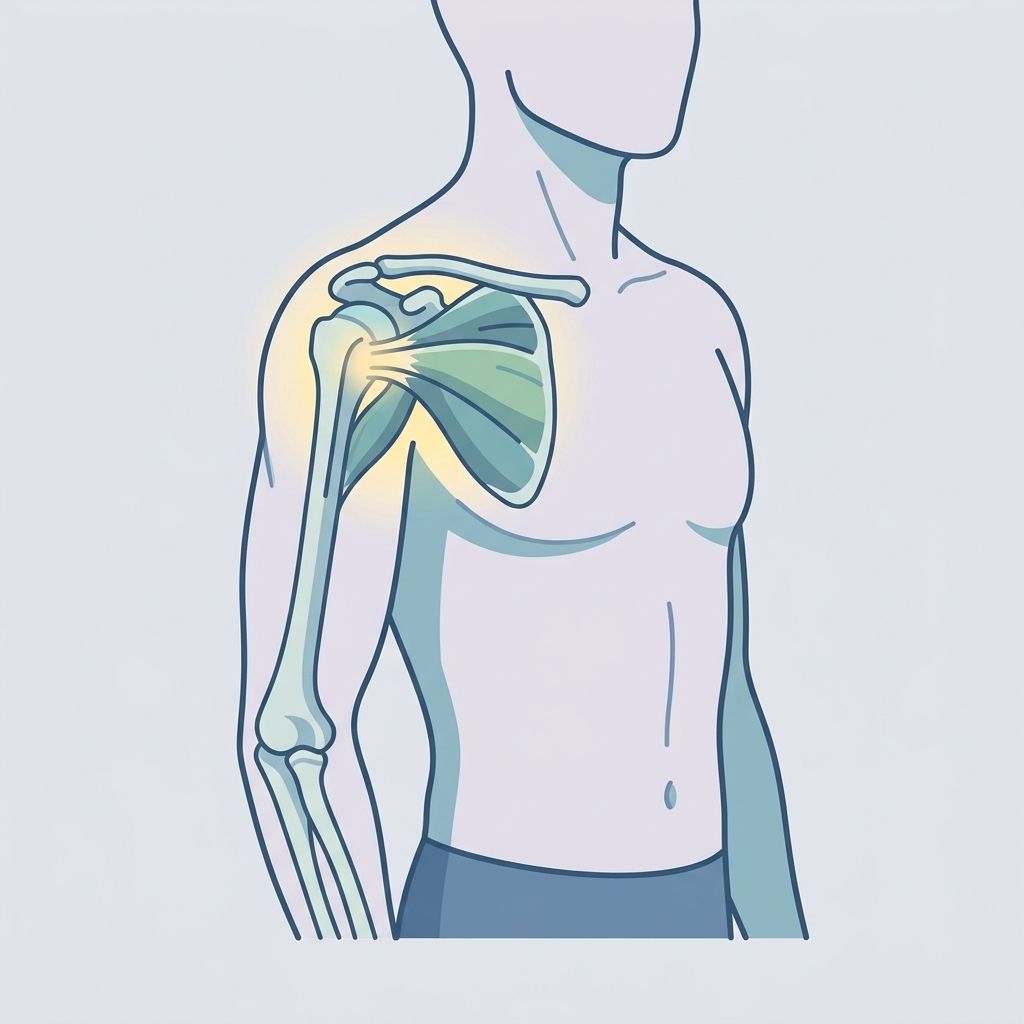
Rotator Cuff Isometrics Exercises
Step-by-step home exercise guide for Rotator Cuff Isometrics to activate key muscles without shoulder joint movement.
Active rehabilitation is a cornerstone of recovery. Isometric exercises allow you to activate and strengthen the muscles of the rotator cuff without moving the shoulder joint, protecting healing tissues while maintaining muscle tone. On this page, we outline key home exercises for Rotator Cuff Isometrics designed to help you regain shoulder function. Always consult your care team before beginning.
General Guidelines & Safety Precautions
- Posture First: Keep your chest tall and shoulders rolled back and down. Do not shrug your neck.
- The Pain Rule: Exercises should never cause sharp or shooting pain. Squeeze gently—about 20% to 30% of maximum effort to start—and stop immediately if you feel pain.
- Hold and Breathe: Do not hold your breath. Breathe slowly and deeply through each exercise.
Exercise 1: Isometric Shoulder External Rotation (Infraspinatus & Teres Minor)
Purpose: Activates the muscles on the back of the shoulder that rotate the arm outward.
Equipment Needed: A wall or door frame.
Starting Position: Stand with your affected side next to a wall. Bend your elbow to 90 degrees, keeping your upper arm tucked close to your side. (Optional: place a rolled towel between your side and your elbow to keep your arm in position).
Step-by-Step Instructions:
- Keep your wrist straight and place the back of your hand or wrist against the wall.
- Gently press the back of your hand outward into the wall.
- Hold the contraction for 5 to 10 seconds.
- Slowly release the pressure.
Dosage: 2 to 3 sets of 10 repetitions, hold each for 5 to 10 seconds, 1 to 2 times daily.
Tips & Common Mistakes: Do not rotate your body or lean into the wall. The movement should come only from trying to rotate your arm.
Exercise 2: Isometric Shoulder Internal Rotation (Subscapularis)
Purpose: Activates the large muscle at the front of the shoulder blade that rotates the arm inward.
Equipment Needed: A wall corner, door frame, or your opposite hand.
Starting Position: Stand facing a wall corner or door frame. Bend your elbow to 90 degrees on the affected side.
Step-by-Step Instructions:
- Place the palm of your hand flat against the wall corner or door frame.
- Gently press your palm inward into the wall.
- Hold the contraction for 5 to 10 seconds.
- Slowly release the pressure.
Dosage: 2 to 3 sets of 10 repetitions, hold each for 5 to 10 seconds, 1 to 2 times daily.
Tips & Common Mistakes: Ensure you do not shrug your shoulder up toward your ear. Keep your shoulder blade squeezed slightly back and down.
Exercise 3: Isometric Shoulder Abduction (Supraspinatus)
Purpose: Activates the muscle responsible for initiating the lift of your arm to the side.
Equipment Needed: A wall.
Starting Position: Stand side-on next to a wall with your affected arm. Bend your elbow to 90 degrees with your upper arm near your side.
Step-by-Step Instructions:
- Place the outside of your elbow or forearm against the wall.
- Gently press your arm outward into the wall as if you are trying to lift your arm out to the side.
- Hold the contraction for 5 to 10 seconds.
- Slowly release the pressure.
Dosage: 2 to 3 sets of 10 repetitions, hold each for 5 to 10 seconds, 1 to 2 times daily.
Tips & Common Mistakes: Keep your shoulder down and do not tilt your body to press. The action must be purely isometric (no joint movement).
Exercise 4: Isometric Shoulder Flexion (Anterior Stabilizers)
Purpose: Baseline activation of the front shoulder muscles and joint stabilizers.
Equipment Needed: A wall.
Starting Position: Stand facing a wall. Bend your elbow to 90 degrees on your affected side, making a loose fist.
Step-by-Step Instructions:
- Place the front of your fist against the wall (use a small towel between your fist and the wall for cushion).
- Gently press your fist forward into the wall.
- Hold the contraction for 5 to 10 seconds.
- Slowly release the pressure.
Dosage: 2 to 3 sets of 10 repetitions, hold each for 5 to 10 seconds, 1 to 2 times daily.
Tips & Common Mistakes: Keep your body upright and do not lean your weight forward into the wall. Focus on using your shoulder muscles.
Always consult with your physical therapist or doctor before starting a new exercise routine. If any exercise causes persistent pain or swelling, discontinue it and contact your healthcare provider.
Disclaimer: This guide provides general exercise instructions and is not a substitute for professional medical advice. Always consult your doctor or qualified healthcare provider with any questions you may have regarding your specific medical condition and treatment plan.

Related articles
Browse all articlesTrusted External Resources
Curated educational materials to help you make informed decisions about your orthopaedic bone & joint conditions.

Orthopaedia

Orthogate Patient Education