Posterior Shoulder Dislocation
Get Clear, Concise Answers to Your Top Questions About Posterior Shoulder Dislocation
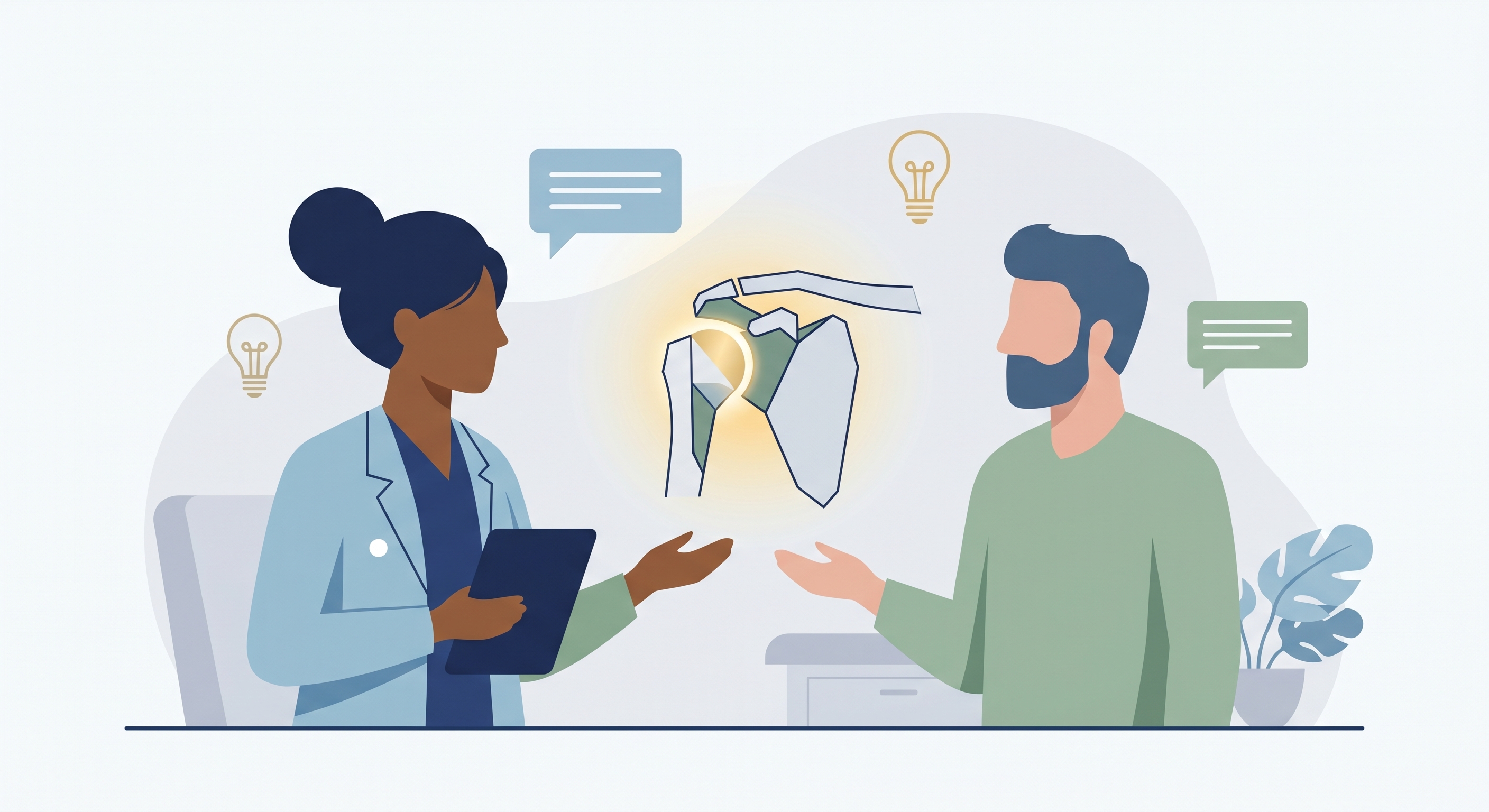
Your shoulder is a ball-and-socket joint, which allows for a wide range of motion. A dislocation occurs when the "ball" (the top of your arm bone, or humerus) comes completely out of the "socket" (part of your shoulder blade, or scapula). A posterior dislocation means the ball has moved backward out of the socket.
Q1: What is a posterior shoulder dislocation?
A posterior shoulder dislocation happens when the ball of your upper arm bone (humerus) is pushed backward and out of its socket (glenoid) in the shoulder blade. This is less common than an anterior (forward) dislocation.
Q2: What causes a posterior shoulder dislocation?
These dislocations typically result from a forceful injury. Common causes include:
- Seizures or electrical shocks that cause strong muscle contractions.
- Falling onto an outstretched hand, especially with the arm turned inwards.
- Direct impact to the front of the shoulder.
Q3: What are the common symptoms?
You will likely experience:
- Sudden, severe shoulder pain.
- Inability to move your arm, especially lifting it or turning it outwards.
- Your arm may be held close to your body and turned inward.
- A visible deformity or bump at the back of your shoulder.
- Swelling and bruising.
- Muscle spasms around the shoulder.
- Sometimes, numbness or tingling in the arm or hand.
Q4: How is a posterior shoulder dislocation diagnosed?
Your doctor will examine your shoulder and ask about your injury. X-rays are typically used to confirm the dislocation and check for any broken bones. Sometimes, a CT scan or MRI may be needed to see more detail, especially if the dislocation is difficult to diagnose or if there are concerns about soft tissue damage.
Q5: What are the non-surgical treatment options?
The main non-surgical treatment is a "closed reduction," where a doctor manually puts the ball back into the socket. This is often done in an emergency room with medication to relax your muscles and manage pain. After reduction, your shoulder will be immobilized in a sling for a period to allow healing. Ice and pain relievers will also be used to manage discomfort and swelling.
Q6: What does the closed reduction procedure involve?
After receiving medication to ease pain and relax muscles, your doctor will gently manipulate your arm and shoulder to guide the humeral head back into its correct position within the socket. This usually provides immediate pain relief once the shoulder is back in place.
Q7: What does the recovery process involve immediately after reduction?
Immediately after reduction, your shoulder will likely be sore and swollen. You will wear a sling or brace to keep your arm still and protect the healing tissues. You'll be given instructions on pain management and how to care for your shoulder.
Q8: How long is the typical recovery period?
Recovery time varies depending on the severity of the injury and whether you had surgery. For uncomplicated dislocations treated with closed reduction, initial healing usually takes a few weeks, with full recovery taking 6 to 12 weeks. If surgery is needed, recovery can be longer, often 3 to 6 months.
Q9: What does rehabilitation/physical therapy involve?
Physical therapy is crucial for full recovery. It typically starts with gentle exercises to restore pain-free movement, such as pendulum swings. As your shoulder heals, you will progress to strengthening exercises for the muscles around your shoulder (rotator cuff, deltoid, scapular stabilizers) to improve stability and prevent future dislocations.
Q10: How will pain be managed?
Pain will be managed with a combination of approaches:
- Ice: Applying ice packs to the affected area for 15-20 minutes several times a day can help reduce swelling and pain.
- Medication: Over-the-counter pain relievers like ibuprofen or naproxen may be recommended. Stronger prescription pain medications might be prescribed for the initial acute pain.
- Rest: Limiting activities that cause pain is important for healing.
Q11: What can I do at home to help my recovery?
- Follow sling instructions: Wear your sling as directed by your doctor.
- Ice regularly: Apply ice as recommended to reduce swelling and pain.
- Take medications as prescribed: Adhere to your pain relief and anti-inflammatory medication schedule.
- Gentle movements (as advised): Once cleared by your doctor or physical therapist, perform the gentle exercises they recommend to prevent stiffness.
- Avoid certain movements: Do not try to forcefully move your arm or put it in positions that cause pain, especially internal rotation and reaching behind your back early in recovery.
Q12: When can I expect to return to daily activities, work, driving, and sports?
- Daily Activities: Light daily activities can usually resume within a few weeks, gradually increasing as pain allows.
- Driving: You should not drive while wearing a sling or if your arm movement is limited, generally not for several weeks. Your doctor will advise when it is safe.
- Work: Return to work depends on the physical demands of your job. Light office work may be possible sooner than manual labor.
- Sports/Strenuous Activities: Return to sports or high-impact activities will take longer, typically several months, and requires your shoulder to have full strength and stability. Your doctor and physical therapist will guide this process.
Q13: What are the potential risks or complications of treatment?
While rare, potential complications can include:
- Recurrent dislocations.
- Nerve or blood vessel damage.
- Fractures (especially of the humeral head or glenoid).
- Stiffness or limited range of motion (frozen shoulder).
- Chronic pain or instability.
- Infection (if surgery is performed).
- Arthritis in the long term.
Q14: What signs or symptoms should I watch out for and report to my doctor immediately?
Contact your doctor immediately if you experience:
- Increasing or severe pain that isn't controlled by medication.
- Numbness, tingling, or weakness in your arm or hand that worsens or doesn't improve.
- Significant swelling, redness, or warmth around the shoulder, which could indicate infection (if surgical).
- Fever or chills.
- Your shoulder dislocates again.
- Any new or unusual symptoms.
Q15: What is the expected long-term outcome?
With appropriate treatment and rehabilitation, most people recover well from a posterior shoulder dislocation and can return to their previous activity levels. However, there is a risk of future dislocations, especially in younger individuals or if there was significant bone or soft tissue damage. Following your rehabilitation plan carefully is key to a good long-term outcome.
We encourage you to write down any specific questions you have and discuss them thoroughly with your surgeon, doctor, or physical therapist. They are your best resource for personalized advice and care.
Disclaimer: This brochure provides general information and is not a substitute for professional medical advice. Always consult your doctor or qualified healthcare provider with any questions you may have regarding your specific medical condition and treatment plan.

Related articles
Browse all articlesTrusted External Resources
Curated educational materials to help you make informed decisions about your orthopaedic bone & joint conditions.

Orthopaedia
Orthogate Patient Education