
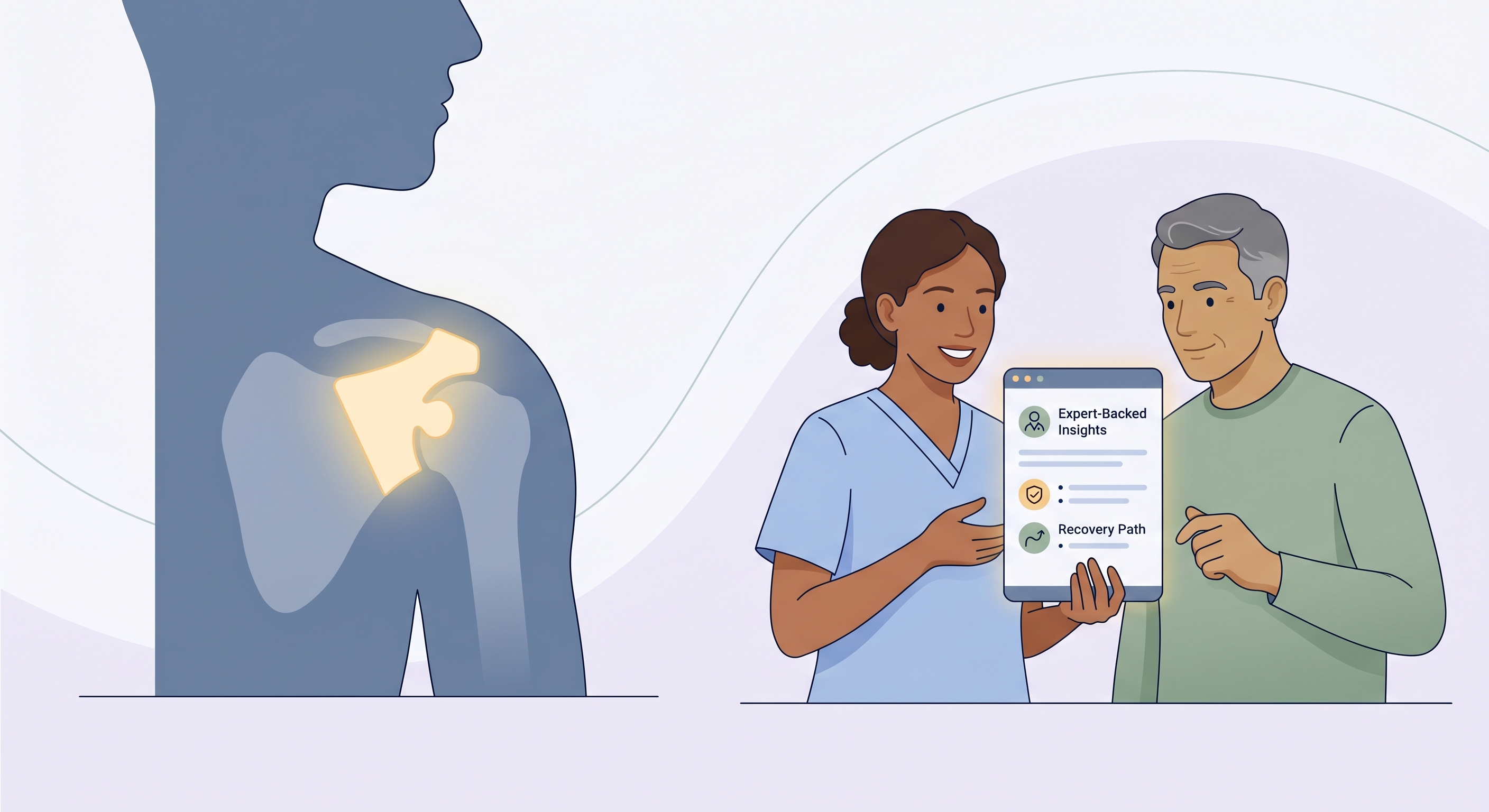
Rotator Interval Sprain
Get Clear, Concise Answers to Your Top Questions About Rotator Interval Sprain
Q1: What is a Rotator Interval Sprain?
The rotator interval is a small but important space in the front of your shoulder. It contains strong ligaments and part of your biceps tendon. A "sprain" means these ligaments have been stretched or torn. This can happen due to an injury or repetitive stress.
Q2: What causes a Rotator Interval Sprain?
It's often caused by injuries that pull or twist the arm forcefully, such as a fall, or by repetitive overhead activities that stress the shoulder joint. In some cases, it can be associated with other shoulder problems like rotator cuff tears or shoulder instability.
Q3: What are the common symptoms?
Symptoms typically include pain in the front of the shoulder, especially with certain arm movements. You might also experience:
- Deep, aching shoulder pain.
- Pain that worsens with overhead activities or reaching across your body.
- Weakness when lifting or rotating your arm.
- Clicking or popping sensations in the shoulder.
- Difficulty sleeping on the affected side.
Q4: How is a Rotator Interval Sprain diagnosed?
Your doctor will perform a thorough physical exam, asking about your symptoms and how the injury occurred. They will move your arm in different ways to check for pain and weakness. Imaging tests like an MRI (Magnetic Resonance Imaging) are often used to confirm the diagnosis and check for other related issues.
Q5: What are the non-surgical treatment options?
Non-surgical treatment is usually the first approach. It often includes:
- Rest and activity modification: Avoiding activities that worsen your pain.
- Pain management: Over-the-counter pain relievers (like ibuprofen) or prescription medications.
- Ice and heat: Applying ice to reduce swelling and pain, and heat to relax muscles.
- Physical therapy: A customized exercise program to improve flexibility, strength, and shoulder mechanics.
- Injections: Corticosteroid injections into the shoulder joint can help reduce pain and inflammation.
Q6: When is surgery considered?
Surgery is usually considered if non-surgical treatments don't provide enough relief after a few months, or if there's significant shoulder instability that the rotator interval plays a role in. It's less common for an isolated rotator interval sprain to require surgery unless it's contributing to other severe shoulder problems.
Q7: What does the surgical procedure involve (if applicable)?
If surgery is needed, it's typically performed using arthroscopy, a minimally invasive technique. Small incisions are made, and a tiny camera and instruments are used to view and repair the structures. The goal of surgery is often to tighten or repair the stretched ligaments in the rotator interval to improve shoulder stability.
Q8: What are the potential risks of surgery?
As with any surgery, there are risks, including:
- Infection
- Bleeding
- Stiffness or limited range of motion
- Nerve or blood vessel damage
- Re-injury or continued pain
- Reactions to anesthesia
Your surgeon will discuss these risks with you in detail.
Q9: What do I need to do before treatment/surgery?
Before any treatment, follow your doctor's specific instructions. This might include:
- Modifying activities.
- Taking prescribed medications.
- Attending physical therapy sessions.
- If surgery is planned, you may need to stop certain medications (like blood thinners) and arrange for someone to drive you home.
Q10: What can I expect immediately after treatment/surgery?
Immediately after treatment (whether non-surgical or surgical), you'll likely experience some pain and swelling. You may need to wear a sling to protect your shoulder and limit movement. Your doctor or therapist will guide you on pain management and initial exercises.
Q11: How long is the typical recovery period?
Recovery time varies greatly depending on the severity of the sprain and whether surgery was performed.
- Non-surgical recovery: Can range from several weeks to a few months.
- Surgical recovery: Can take 4 to 6 months, and sometimes up to a year for full return to all activities, especially if combined with other shoulder repairs. Consistent physical therapy is key to a successful recovery.
Q12: What does rehabilitation/physical therapy involve?
Physical therapy is crucial. It will involve:
- Pain and swelling management: Using ice, heat, and other modalities.
- Range of motion exercises: To restore normal movement.
- Strengthening exercises: To rebuild strength in your shoulder and surrounding muscles.
- Gradual return to activity: Your therapist will guide you on when and how to safely return to daily tasks, work, and sports.
Q13: How will pain be managed?
Pain will be managed with a combination of approaches:
- Medications: Over-the-counter pain relievers, anti-inflammatory drugs, or prescription pain medications.
- Ice and heat therapy.
- Proper positioning: Supporting your arm with pillows, especially when sleeping.
- Gentle movement: Early, controlled movement as advised by your therapist can help reduce stiffness and pain.
Q14: What can I do at home to help my recovery?
- Follow your doctor's and therapist's instructions carefully.
- Consistently perform your prescribed home exercises.
- Apply ice or heat as recommended.
- Take medications as directed.
- Avoid activities that cause significant pain.
- Maintain good posture.
- Keep the shoulder moving and work with a therapist to push through discomfort and prevent stiffness.
Q15: When can I expect to return to daily activities, work, driving, sports, etc.?
This varies for everyone. Your doctor and physical therapist will give you specific timelines based on your progress.
- Daily activities: Light activities may be resumed within weeks, while more strenuous tasks will take longer.
- Driving: Often possible once you can safely and comfortably control the affected arm, usually several weeks after significant injury or surgery.
- Work: Depends on the nature of your job; light duty may be possible sooner than jobs requiring heavy lifting or repetitive arm movements.
- Sports: Return to sports is a gradual process, typically several months for most activities, and even longer for overhead or contact sports, with a focus on sport-specific rehabilitation.
We encourage you to write down any specific questions you have and discuss them thoroughly with your surgeon, doctor, or physical therapist. They are your best resource for personalized advice and care.
Disclaimer: This brochure provides general information and is not a substitute for professional medical advice. Always consult your doctor or qualified healthcare provider with any questions you may have regarding your specific medical condition and treatment plan.

Related articles
Browse all articlesTrusted External Resources
Curated educational materials to help you make informed decisions about your orthopaedic bone & joint conditions.

Orthopaedia

Orthogate Patient Education