Lower Trapezius Tendon Transfer Protocol
Phase-by-phase post-operative rehabilitation protocol for Lower Trapezius Tendon Transfer to guide recovery and physical therapy.
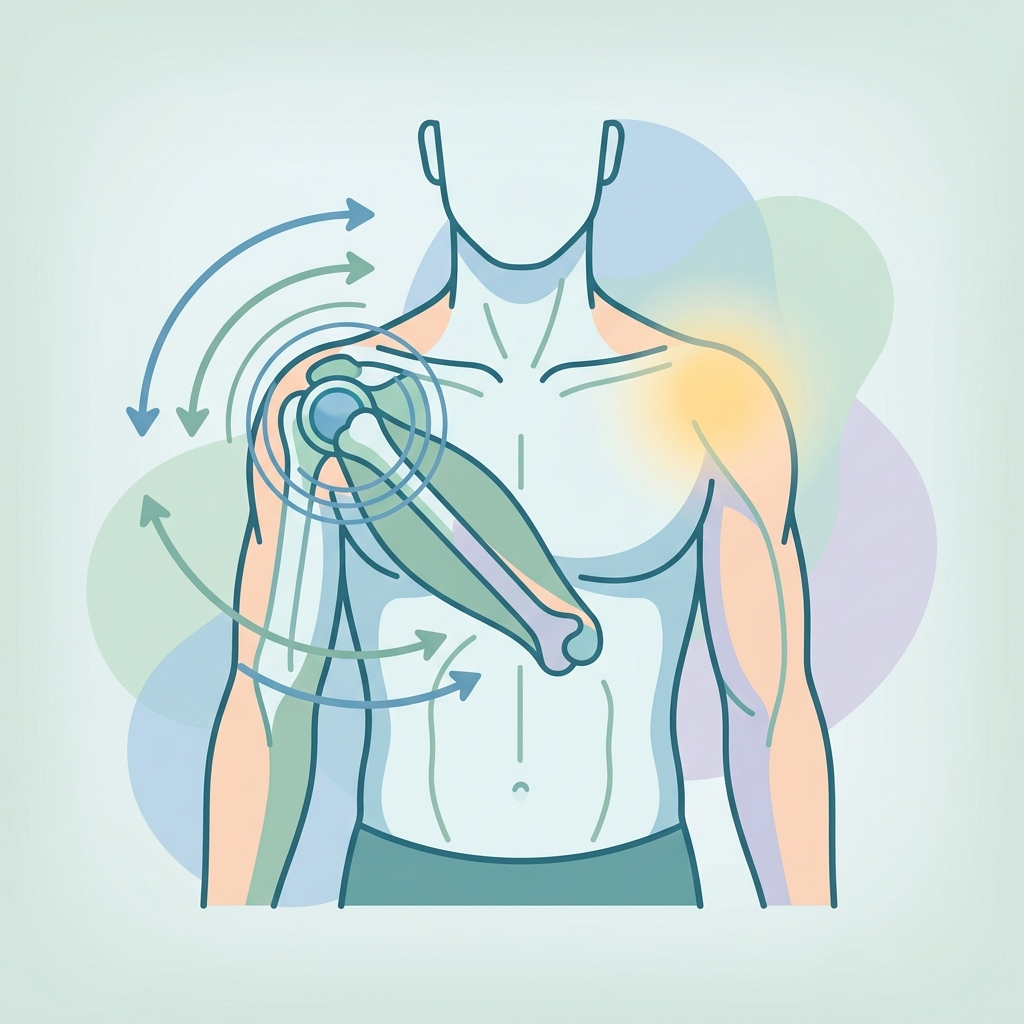
A lower trapezius tendon transfer (LTTT) is a sophisticated reconstructive procedure designed for patients with massive, irreparable posterosuperior rotator cuff tears. In this surgery, the lower trapezius muscle is elongated using an Achilles tendon allograft and transferred to the greater tuberosity of the humerus. This transfer restores the force couple of the shoulder, specifically improving active external rotation and elevation. Because the transferred muscle must remodel and heal in its new position, a highly structured, phase-based rehabilitation protocol is critical. Early rehabilitation focuses on protecting the healing graft while preventing stiffness, followed by neuromuscular re-education to train the lower trapezius to act as a shoulder external rotator.
Phase I: Protection and Passive Range of Motion (Weeks 0-6)
The primary goal of this phase is to protect the tendon transfer and graft attachment site while preventing shoulder stiffness and managing pain.
Goals:
- Protect the integrity of the transferred tendon and allograft.
- Maintain passive Range of Motion (ROM) within safe limits.
- Minimize pain, inflammation, and muscle guarding.
- Ensure independent and safe execution of home program and activities of daily living (ADLs) with precautions.
Precautions & Restrictions:
- Sling/Brace: Wear the external rotation abduction sling (typically 30 degrees abduction, 15-20 degrees external rotation) 24 hours a day, including during sleep. It should only be removed for hygiene and physical therapy exercises.
- No Active External Rotation (ER): Absolutely no active or active-assisted external rotation to avoid tension on the transfer.
- No Passive Internal Rotation (IR): Avoid passive internal rotation past neutral (0 degrees) or 20 degrees, and avoid adduction across the midline, as this puts direct stretch and tension on the healing graft.
- Weight Bearing: No lifting, pushing, pulling, or bearing weight through the surgical arm.
Suggested Exercises:
- Passive flexion and elevation in the plane of the scapula, limited to 90 degrees (progressing to 120 degrees by week 6 as tolerated).
- Passive external rotation (ER) in the scapular plane, limited to 30 degrees (or as specified by the surgeon).
- Active range of motion for elbow, wrist, and hand to prevent distal stiffness.
- Cervical spine active range of motion and gentle scapular retraction/elevation while in the sling.
- Cryotherapy (ice) for 15-20 minutes several times a day for pain and edema control.
Criteria to Progress:
- Completed 6 weeks of immobilization and protection.
- Sufficient healing of the graft construct as determined by the surgeon.
- Passive scapular plane elevation to at least 90 degrees and passive external rotation to 30 degrees.
- Minimal resting pain.
Phase II: Active-Assisted to Active Range of Motion (Weeks 6-12)
During this phase, immobilization is gradually discontinued, and the focus shifts to restoring full passive range of motion and initiating active-assisted and active movement, including neuromuscular re-education of the transferred trapezius muscle.
Goals:
- Gradually wean from the abduction sling.
- Restore full passive range of motion (PROM).
- Initiate active-assisted range of motion (AAROM) and active range of motion (AROM).
- Re-educate the lower trapezius to activate during external rotation and shoulder elevation.
Precautions & Restrictions:
- Wean from the sling over a 1-to-2-week period (typically discontinued completely by week 8, except in crowded or unsafe environments).
- No sudden, jerky movements or lifting of objects heavier than 1-2 pounds.
- Avoid forced or aggressive passive stretching, particularly into internal rotation and cross-body adduction.
Suggested Exercises:
- AAROM using a wand or pulley for flexion, abduction, and external rotation (as tolerated).
- Initiate AROM: supine active shoulder flexion, progress to seated active flexion in the scapular plane once control is established.
- Neuromuscular re-education: Practice lower trapezius activation (gentle scapular retraction and depression) combined with external rotation in a supported position.
- Scapular strengthening: Prone rows, shrugs, and scapular retractions without resistance.
- Submaximal pain-free shoulder isometrics (except external rotation, which should remain gentle and active/AAROM).
Criteria to Progress:
- Active elevation to at least 110-120 degrees with good scapular control.
- Passive range of motion near normal or symmetrical to the uninvolved side.
- Ability to activate the lower trapezius muscle during simple movement patterns.
- Pain levels remain low during and after exercise.
Phase III: Strengthening and Neuromuscular Re-education (Weeks 12-18)
This phase is dedicated to progressive strengthening of the rotator cuff, deltoid, scapular stabilizers, and specifically the transferred lower trapezius, while building endurance and dynamic stability.
Goals:
- Achieve full, pain-free active range of motion in all planes.
- Improve strength and endurance of the transferred lower trapezius and remaining shoulder musculature.
- Restore normal scapulohumeral rhythm and dynamic shoulder stability.
- Gradually return to light, functional daily activities.
Precautions & Restrictions:
- Avoid overhead lifting of heavy objects (limit to 5 pounds).
- Do not push through sharp or catching pain.
- Ensure proper posture and scapular positioning during all exercises; avoid compensatory shrug movements.
Suggested Exercises:
- Rotator cuff strengthening: Internal and external rotation using resistance bands or light dumbbells (1-2 lbs), performed in the scapular plane.
- Trapezius and scapular strengthening: Prone \"T\" and \"Y\" exercises, rows with resistance bands, and serratus anterior punches.
- Dynamic stabilization: Wall slides, quadruped scapular stabilization, and ball stabilization on the wall.
- Closed-chain exercises: Gentle wall push-ups or weight-bearing exercises to improve proprioception.
- Progressive functional task training relevant to daily activities.
Criteria to Progress:
- Full, pain-free active range of motion.
- Good scapular control and mechanics during elevation (no dynamic dyskinesia).
- Rotator cuff and scapular stabilizer strength at least 4/5 on manual muscle testing.
- No increased pain or inflammation following strengthening sessions.
Phase IV: Advanced Conditioning and Return to Activity (Weeks 18-24+)
The final phase focuses on maximizing strength, power, and endurance, and preparing the patient for a safe return to work, sports, or demanding recreational activities.
Goals:
- Maximize shoulder strength, power, and muscular endurance.
- Restore full confidence and high-level functional capacity.
- Facilitate a safe return to recreational activities, sports, or physical labor.
- Maintain long-term joint health and prevent recurrent injury.
Precautions & Restrictions:
- Gradually progress intensity; do not initiate high-impact or heavy lifting without proper conditioning.
- Modify activities if shoulder pain, clicking, or swelling occurs.
Suggested Exercises:
- Advanced strengthening: Progress weight and resistance for rotator cuff and scapular stabilizers.
- Eccentric rotator cuff strengthening and high-speed band work.
- Plyometric training: Chest passes, overhead throws with light medicine balls (if returning to throwing sports).
- Sport-specific or work-specific drill progressions (e.g., throwing, racket sports, swimming, lifting).
- Continued core and lower body conditioning to maximize kinetic chain efficiency.
Criteria to Progress:
- Clearance from the orthopedic surgeon.
- Symmetrical shoulder strength (at least 85-90% compared to the uninvolved side).
- Full, pain-free functional movement patterns.
- Successful completion of sport-specific or work-specific progressions.
These guidelines represent a standard rehabilitation protocol. Individual recovery rates vary significantly depending on the size of the repair, bone/tissue quality, and general patient health. Your surgeon may modify this protocol specifically for you.
Disclaimer: This protocol is for educational purposes and is not a substitute for professional medical advice. Always consult your surgeon or physical therapist before performing any exercises or modifying activity restrictions.

Related articles
Browse all articlesTrusted External Resources
Curated educational materials to help you make informed decisions about your orthopaedic bone & joint conditions.

Orthopaedia
Orthogate Patient Education