
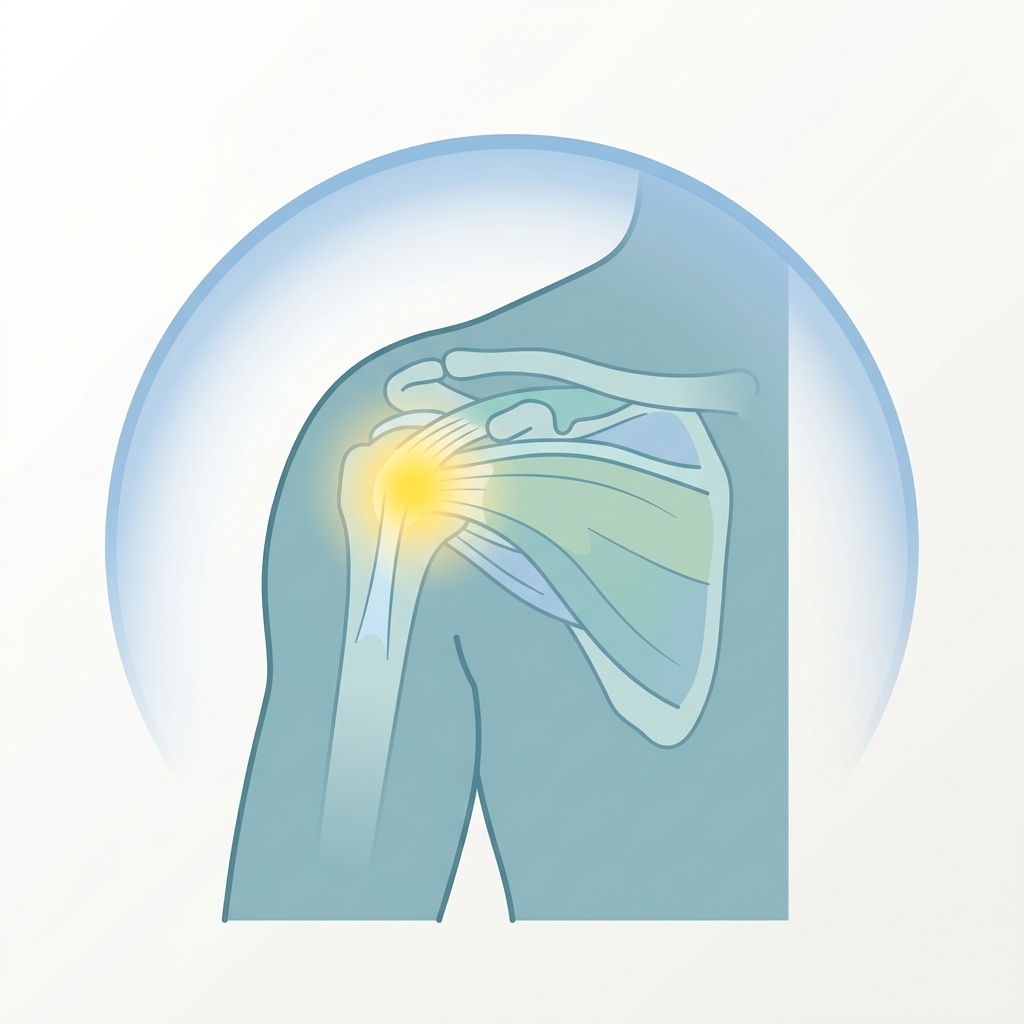
Arthroscopic Rotator Cuff Repair – Delayed Protocol
Phase-by-phase post-operative rehabilitation protocol for Arthroscopic Rotator Cuff Repair – Delayed Protocol to guide recovery and physical therapy.
This phase-based post-operative rehabilitation protocol is designed specifically for patients recovering from an arthroscopic rotator cuff repair where a delayed mobilization strategy is indicated. A delayed protocol is typically recommended for large, massive, or complex rotator cuff tears, or in cases with poor bone and tissue quality where early range of motion could compromise the structural integrity of the tendon repair. By delaying active movement and extending the initial immobilization period, we allow the repaired tendon to form a secure attachment to the bone, minimizing the risk of re-tearing.
Phase 1: Protection and Passive Range of Motion (Weeks 0 - 6)
The primary focus of this phase is to protect the healing tendon repair while minimizing stiffness, pain, and inflammation. The shoulder must remain immobilized in an abduction sling at all times, except during personal hygiene and performing prescribed passive exercises.
Goals:
- Protect the integrity of the healing rotator cuff repair.
- Minimize pain, inflammation, and muscle guarding.
- Gradually restore passive forward flexion to 120-140 degrees by week 6.
- Gradually restore passive external rotation to 30-40 degrees (with arm at side) by week 6.
- Maintain full mobility in the elbow, wrist, hand, and fingers.
Precautions & Restrictions:
- Strictly wear the abduction sling/pillow at all times, including during sleep.
- No active range of motion (AROM) or active-assisted range of motion (AAROM) of the surgical shoulder. Do not lift the arm using its own muscles.
- No reaching behind the back (internal rotation) or lifting any objects with the surgical arm.
- No weight bearing or pushing/pulling with the surgical arm.
- Avoid aggressive passive stretching; all movements should be gentle and pain-free.
Suggested Exercises:
- Pendulum (Codman's) exercises for gentle passive distraction.
- Passive forward flexion in the supine position (using a stick or guided by a physical therapist).
- Passive external rotation (arm at side, limited to 30 degrees for the first 4 weeks, progressing to 40 degrees by week 6).
- Active range of motion for the elbow, wrist, and hand/fingers to prevent distal stiffness.
- Squeeze shoulder blades together (gentle scapular retraction) while wearing the sling.
Criteria to Progress:
- Completion of 6 weeks of strict immobilization and protection.
- Passive forward flexion to at least 120 degrees.
- Passive external rotation to 30 degrees.
- Minimal pain at rest and during passive exercises.
Phase 2: Active-Assisted & Active Range of Motion (Weeks 6 - 12)
During this phase, the sling is gradually discontinued, and the focus shifts to restoring full range of motion. Active-assisted and active exercises are introduced to rebuild basic movement patterns without putting excessive load on the healing tendon.
Goals:
- Gradually wean from the abduction sling over a 1-to-2 week period.
- Achieve full passive range of motion in all planes by week 10.
- Establish coordinated active range of motion without compensatory shrugging.
- Optimize scapular mobility and stability.
Precautions & Restrictions:
- Do not lift objects heavier than a cup of water (approximately 1 pound).
- No sudden, jerking, or rapid movements of the shoulder.
- No resisted strengthening exercises (no bands, weights, or isometrics).
- Avoid activities that cause the shoulder blade to shrug up to lift the arm.
Suggested Exercises:
- Active-assisted forward flexion and external rotation using a pulley, cane, or the non-surgical arm.
- Active forward elevation in the supine position (gravity-minimized) progressing to standing active elevation in the scapular plane (scaption) as tolerated.
- Side-lying active external rotation (with a towel roll under the elbow, no weight).
- Submaximal, pain-free isometrics (external/internal rotation, abduction) starting around week 8-10 with the arm at the side.
- Scapular clocks and gentle scapular retraction/protraction to re-establish periscapular control.
Criteria to Progress:
- Full or near-full active range of motion in forward elevation (>140 degrees) and external rotation (>45 degrees) without pain or compensatory mechanics.
- Sling successfully discontinued.
- Normal scapulohumeral rhythm during active movement.
Phase 3: Early Strengthening (Weeks 12 - 18)
With tendon-to-bone healing sufficiently progressed, light resistance exercises are introduced. The goal is to rebuild strength and endurance in the rotator cuff and scapular stabilizing muscles.
Goals:
- Re-establish normal strength in the rotator cuff and scapular stabilizers.
- Improve neuromuscular control and dynamic shoulder stability.
- Return to light, non-strenuous activities of daily living.
Precautions & Restrictions:
- No heavy lifting, pushing, or pulling (avoid lifting anything over 5-10 pounds).
- Avoid overhead lifting or carrying heavy loads.
- Stop any exercise that causes sharp pain or clicking in the shoulder.
Suggested Exercises:
- Rotator cuff strengthening using light resistance bands (external rotation, internal rotation) with the elbow tucked to the side.
- Dumbbell progressions for scaption (elevation in the scapular plane) using light weights (1-3 pounds), keeping movements below shoulder height initially.
- Prone scapular strengthening series (Y, T, W exercises) to target the lower trapezius and rhomboids.
- Serratus punches (supine or standing against a wall) to strengthen the serratus anterior.
- Gentle closed-kinetic chain exercises (such as wall slides or quadruped rock-backs).
Criteria to Progress:
- Rotator cuff strength graded at least 4/5 on manual muscle testing.
- Ability to perform light activities of daily living without pain or fatigue.
- Sufficient scapular control during resistance exercises.
Phase 4: Advanced Strengthening & Return to Activity (Weeks 18+)
The final phase focuses on maximizing strength, power, and muscular endurance. Exercises are tailored to prepare the patient for a safe return to work, sports, and recreational activities.
Goals:
- Progressively restore full strength, power, and endurance.
- Return to unrestricted work, sports, and recreational activities.
- Maintain a long-term home exercise program for shoulder health.
Precautions & Restrictions:
- Gradually increase the volume and intensity of training to avoid tendon flare-ups.
- Avoid sudden, unaccustomed loading of the shoulder.
- Ensure proper form is maintained during all heavy lifting or sport-specific movements.
Suggested Exercises:
- Resisted strengthening with heavier bands or dumbbells, including overhead movements if cleared by the surgeon.
- Plyometric deceleration exercises (such as light medicine ball chest passes or wall tosses) to train the rotator cuff to absorb force.
- Work-specific and sport-specific training drills (such as swimming progressions or throwing programs).
- Advanced dynamic stabilization drills (like ball stabilization on a wall or bodyweight planks as tolerated).
Criteria for Return to Sport or Heavy Labor:
- Full, pain-free active range of motion matching the non-surgical shoulder.
- Rotator cuff and scapular strength at least 90% of the contralateral (uninjured) side.
- Successful completion of sport-specific or work-specific rehabilitation progressions.
- Surgeon clearance.
These guidelines represent a standard rehabilitation protocol. Individual recovery rates vary significantly depending on the size of the repair, bone/tissue quality, and general patient health. Your surgeon may modify this protocol specifically for you.
Disclaimer: This protocol is for educational purposes and is not a substitute for professional medical advice. Always consult your surgeon or physical therapist before performing any exercises or modifying activity restrictions.

Related articles
Browse all articlesTrusted External Resources
Curated educational materials to help you make informed decisions about your orthopaedic bone & joint conditions.

Orthopaedia
Orthogate Patient Education