
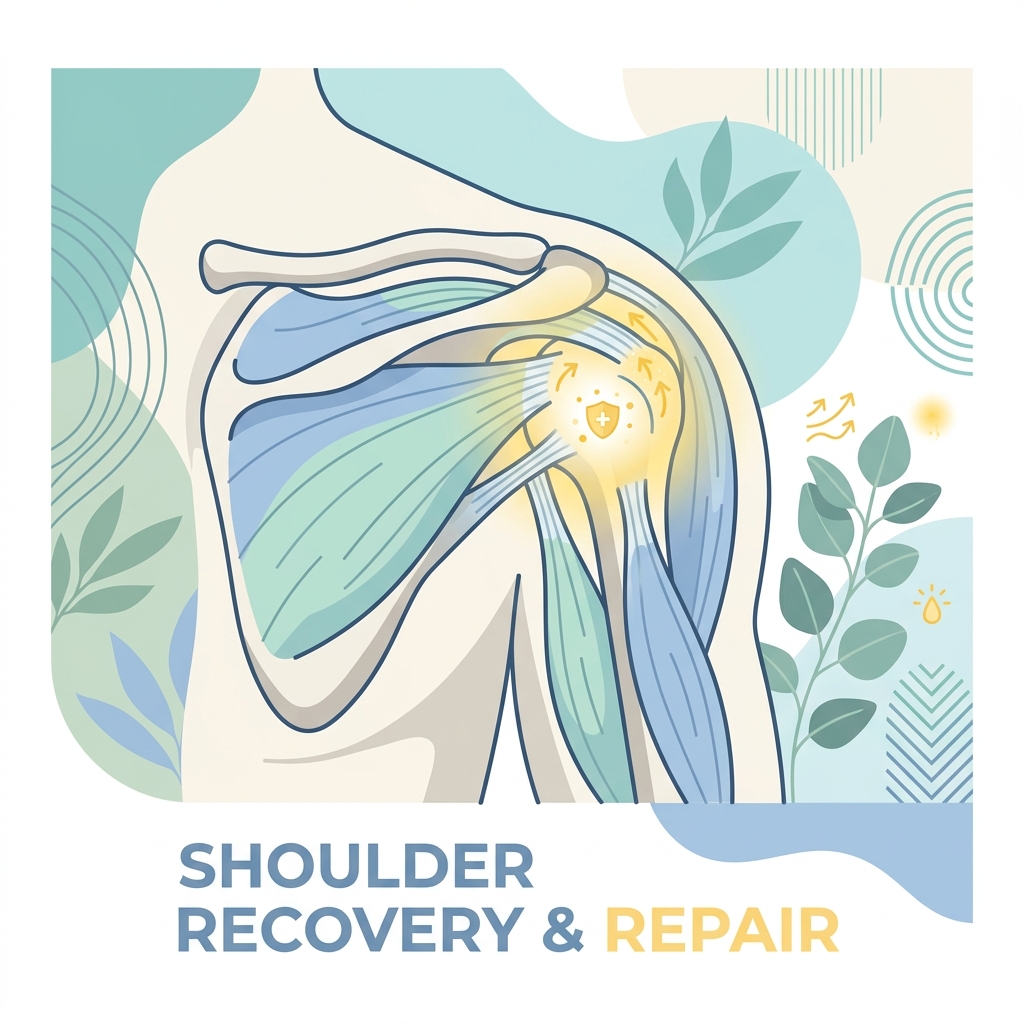
Arthroscopic Labral Debridement / Repair & Cyst Decompression Protocol
Phase-by-phase post-operative rehabilitation protocol for Arthroscopic Labral Debridement / Repair & Cyst Decompression to guide recovery and physical therapy.
This rehabilitation protocol is designed for patients who have undergone arthroscopic labral debridement or repair, combined with the decompression of a paralabral cyst. Paralabral cysts in the shoulder are typically caused by a labral tear (such as a SLAP tear or a posterior labral tear) allowing joint fluid to leak and form a cyst. Decompressing the cyst relieves pressure on adjacent nerves (such as the suprascapular nerve), while addressing the labral tear prevents recurrence. The protocol balances protecting the healing labrum and decompression site with a safe, progressive return to full range of motion and functional strength.
Phase 1: Protective Phase (Weeks 0 to 6)
The primary goals of this phase are to protect the healing labral tissue and the decompressed cyst, minimize post-operative pain and swelling, and slowly reintroduce gentle range of motion within a safe, non-provocative range.
- Goals: Protect surgical repair and cyst decompression site; control pain and swelling; initiate passive range of motion (PROM) and active-assisted range of motion (AAROM); prevent muscle guarding; maintain cervical, elbow, wrist, and hand mobility.
- Precautions & Restrictions: Wear the shoulder sling at all times (including during sleep), removing it only for hygiene and exercises; no active shoulder motion or lifting; limit external rotation (ER) to 30 degrees and abduction to 90 degrees; no forced stretching or aggressive motions; avoid any active biceps activity if a superior labral (SLAP) repair was performed.
- Suggested Exercises: Pendulum exercises; passive/active-assisted shoulder flexion (supine using a cane or opposite hand) to 90 degrees; passive/active-assisted external rotation in scaption to 30 degrees; scapular pinches, shrugs, and rolls; active elbow, wrist, and hand exercises; submaximal shoulder isometrics (excluding abduction or external rotation if painful).
- Criteria to Progress: At least 6 weeks post-surgery; minimal pain at rest; passive flexion to 90 degrees; passive external rotation to 30 degrees; compliance with all protection guidelines.
Phase 2: Intermediate Active Phase (Weeks 6 to 12)
During this phase, the patient is transitioned out of the sling, and active range of motion is restored. Rotator cuff and scapular muscle strengthening is introduced to establish dynamic shoulder stability and normal scapulohumeral movement patterns.
- Goals: Gradually discontinue sling use; restore full active range of motion (AROM) in all planes; re-establish normal scapulohumeral rhythm; initiate light, progressive strengthening of the rotator cuff and scapular stabilizers.
- Precautions & Restrictions: Discontinue the sling by week 6 under the guidance of your therapist; avoid lifting objects heavier than 5 to 10 pounds; avoid sudden, rapid, or jerky arm movements; do not push through sharp pain during exercises.
- Suggested Exercises: Active-assisted to active range of motion in flexion, abduction, and rotation; wall slides and wand exercises to restore range; scapular strengthening (prone rowing, horizontal abduction, extension, and T/Y patterns); rotator cuff strengthening (internal and external rotation with resistance bands, keeping towel roll under arm); dynamic stabilization drills (ball rolls on wall, light manual resistance).
- Criteria to Progress: Full, pain-free active shoulder range of motion; normal scapulohumeral rhythm with active movement; rotator cuff and scapular strength rated at 4/5 or better; no increase in pain or swelling following exercise sessions.
Phase 3: Dynamic Strengthening & Functional Progression (Weeks 12 to 18+)
This phase focus is on restoring full muscular strength, power, and endurance. Exercises are advanced to prepare the patient for returning to demanding recreational activities, sports, or manual work environments.
- Goals: Restore full shoulder strength, power, and muscular endurance; re-establish advanced neuromuscular control; initiate sport-specific or work-specific rehabilitation drills; return to full functional activities.
- Precautions & Restrictions: Avoid overloading the shoulder with excessive or unaccustomed weight; progressive return to activity should be gradual and pain-free; monitor for signs of overuse or inflammation.
- Suggested Exercises: Progressive rotator cuff and scapular strengthening; chest press, lat pulldown, and rowing exercises with increased load; overhead pressing progressions (beginning with light dumbbells in scaption plane and advancing as tolerated); plyometric exercises (medicine ball chest passes, wall dribbles); sport-specific drills (throwing progression, swimming drills, or simulated work tasks).
- Criteria to Progress: Near-full strength (>90% compared to the uninvolved arm); pain-free performance of all dynamic and functional movements; orthopedic surgeon clearance for return to sports or unrestricted manual labor.
These guidelines represent a standard rehabilitation protocol. Individual recovery rates vary significantly depending on the size of the repair, bone/tissue quality, and general patient health. Your surgeon may modify this protocol specifically for you.
Disclaimer: This protocol is for educational purposes and is not a substitute for professional medical advice. Always consult your surgeon or physical therapist before performing any exercises or modifying activity restrictions.

Related articles
Browse all articlesTrusted External Resources
Curated educational materials to help you make informed decisions about your orthopaedic bone & joint conditions.

Orthopaedia
Orthogate Patient Education