
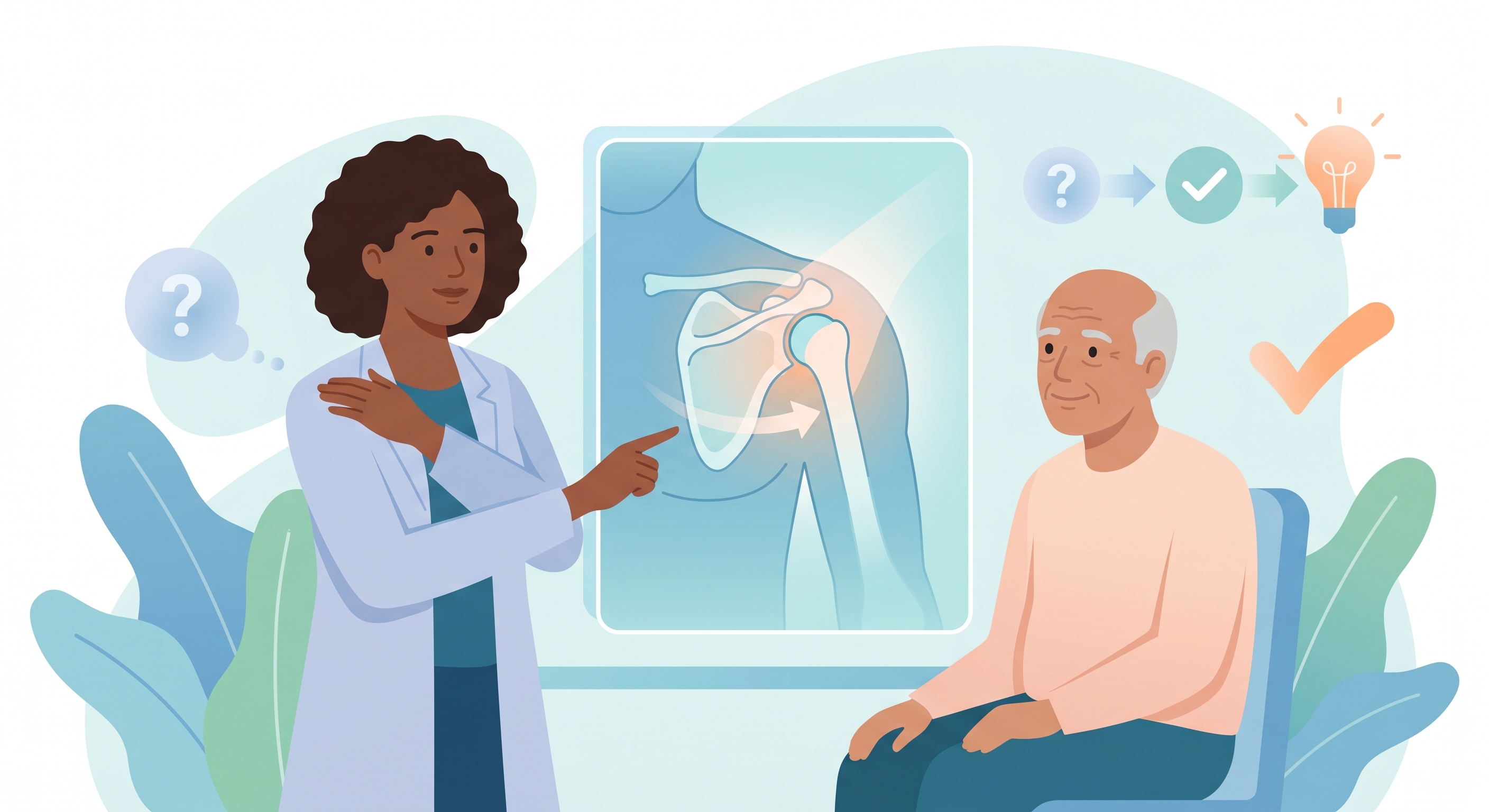
Anterior Shoulder Dislocation
Get Clear, Concise Answers to Your Top Questions About Anterior Shoulder Dislocation
This brochure provides general information about an anterior shoulder dislocation. It is designed to help you understand your condition, treatment options, and recovery process.
Q1: What is an anterior shoulder dislocation?
An anterior shoulder dislocation occurs when the ball of your upper arm bone (humerus) completely pops out of its socket (glenoid) at the front of your shoulder. This is the most common type of shoulder dislocation.
Q2: What causes an anterior shoulder dislocation?
Most anterior shoulder dislocations are caused by a sudden injury, such as a fall onto an outstretched arm, a direct blow to the shoulder, or a sports injury (especially in contact sports).
Q3: What are the common symptoms of an anterior shoulder dislocation?
You will likely experience:
- Intense pain in the shoulder.
- A visibly deformed or "out-of-place" shoulder.
- Swelling or bruising around the shoulder.
- Inability to move the arm.
- Sometimes, numbness, weakness, or tingling down the arm.
Q4: How is an anterior shoulder dislocation diagnosed?
Diagnosis is typically made through a physical examination and X-rays. X-rays confirm the dislocation and can check for any associated bone fractures. In some cases, an MRI or CT scan may be ordered to assess damage to soft tissues like ligaments, tendons, or cartilage (labrum).
Q5: What are the non-surgical treatment options?
The first step is usually a "closed reduction," where a doctor gently manipulates your arm to put the humerus back into its socket without surgery. After reduction, treatment includes:
- Immobilization: Wearing a sling for a period (usually 1-3 weeks) to allow tissues to heal.
- Pain Management: Using ice and over-the-counter pain relievers like ibuprofen or naproxen.
- Physical Therapy: Once initial pain and swelling subside, a physical therapy program will begin to restore range of motion, strengthen the muscles around the shoulder, and improve stability.
Q6: When is surgery recommended for an anterior shoulder dislocation?
Surgery may be recommended if:
- Your shoulder dislocates repeatedly (recurrent instability).
- There's significant damage to the ligaments, labrum (cartilage rim), or bone.
- Non-surgical treatments haven't been successful in stabilizing the shoulder, especially in young, active individuals.
Q7: What does surgery for an anterior shoulder dislocation involve?
The most common surgery is an arthroscopic labral repair (Bankart repair). This involves making small incisions around the shoulder and using tiny instruments to reattach the torn labrum and ligaments to the shoulder socket. In cases of significant bone loss from the socket, a procedure called a Latarjet may be performed to transfer bone to the area. The goal of surgery is to stabilize the joint and prevent future dislocations.
Q8: What are the potential risks of surgery?
As with any surgery, risks include infection, bleeding, nerve damage, stiffness, and the possibility of re-dislocation. Your surgeon will discuss these risks with you.
Q9: What should I do before treatment/surgery?
- Follow your doctor's instructions regarding medication.
- Arrange for transportation home after a reduction or surgery.
- Prepare your home for easy access, as you'll likely have limited use of your arm (e.g., easy-to-wear clothing, food prepared).
- If undergoing surgery, you'll receive specific instructions about fasting before the procedure.
Q10: What can I expect immediately after treatment/surgery?
After reduction or surgery, your arm will be immobilized in a sling. You may experience pain, swelling, and bruising. Pain medication will be prescribed to manage discomfort.
Q11: How long is the typical recovery period?
Recovery time varies depending on the severity of the injury and whether you had surgery.
- Non-surgical: Initial recovery and return to light activities may take a few weeks to 2-3 months. Full recovery with strength and stability can take longer.
- Surgical: You'll typically wear a sling for 4-6 weeks. Full recovery, including a return to sports, can take 4-6 months or more, with physical therapy being crucial.
Q12: What does rehabilitation/physical therapy involve?
Physical therapy is essential for recovery. It generally progresses through phases:
- Phase 1 (Early): Gentle range-of-motion exercises to prevent stiffness, often while still in a sling.
- Phase 2 (Intermediate): Gradual increase in range of motion and light strengthening exercises for the rotator cuff and shoulder blade muscles.
- Phase 3 (Advanced): More intensive strengthening, proprioception (balance and coordination) exercises, and activity-specific drills to prepare for return to full activities.
Q13: How will pain be managed during recovery?
Pain will be managed with a combination of:
- Medication: Prescription pain relievers initially, transitioning to over-the-counter pain relievers (like ibuprofen or acetaminophen).
- Ice: Applying ice packs to reduce swelling and pain.
- Rest: Limiting activities that cause pain.
Q14: What self-care can I do at home to help my recovery?
- Wear your sling as instructed.
- Apply ice to your shoulder for 15-20 minutes several times a day, especially in the first few days.
- Take pain medication as prescribed.
- Follow your physical therapy exercises diligently.
- Practice good posture.
- Avoid movements that cause pain or "apprehension" (a feeling like your shoulder might dislocate again).
- Use your non-injured arm for daily tasks as much as possible.
- Dress comfortably (e.g., front-button shirts).
Q15: What warning signs should I watch out for and report to my doctor immediately?
Contact your doctor if you experience:
- Increased pain that isn't managed by medication.
- New or worsening numbness, tingling, or weakness in your arm or hand.
- Signs of infection (fever, redness, warmth, pus from incisions).
- Severe swelling.
- Your shoulder popping out of place again.
- Any other concerns or unusual symptoms.
We encourage you to write down any specific questions you have and discuss them thoroughly with your surgeon, doctor, or physical therapist. They are your best resource for personalized advice and care.
Disclaimer: This brochure provides general information and is not a substitute for professional medical advice. Always consult your doctor or qualified healthcare provider with any questions you may have regarding your specific medical condition and treatment plan.

Related articles
Browse all articlesTrusted External Resources
Curated educational materials to help you make informed decisions about your orthopaedic bone & joint conditions.

Orthopaedia

Orthogate Patient Education